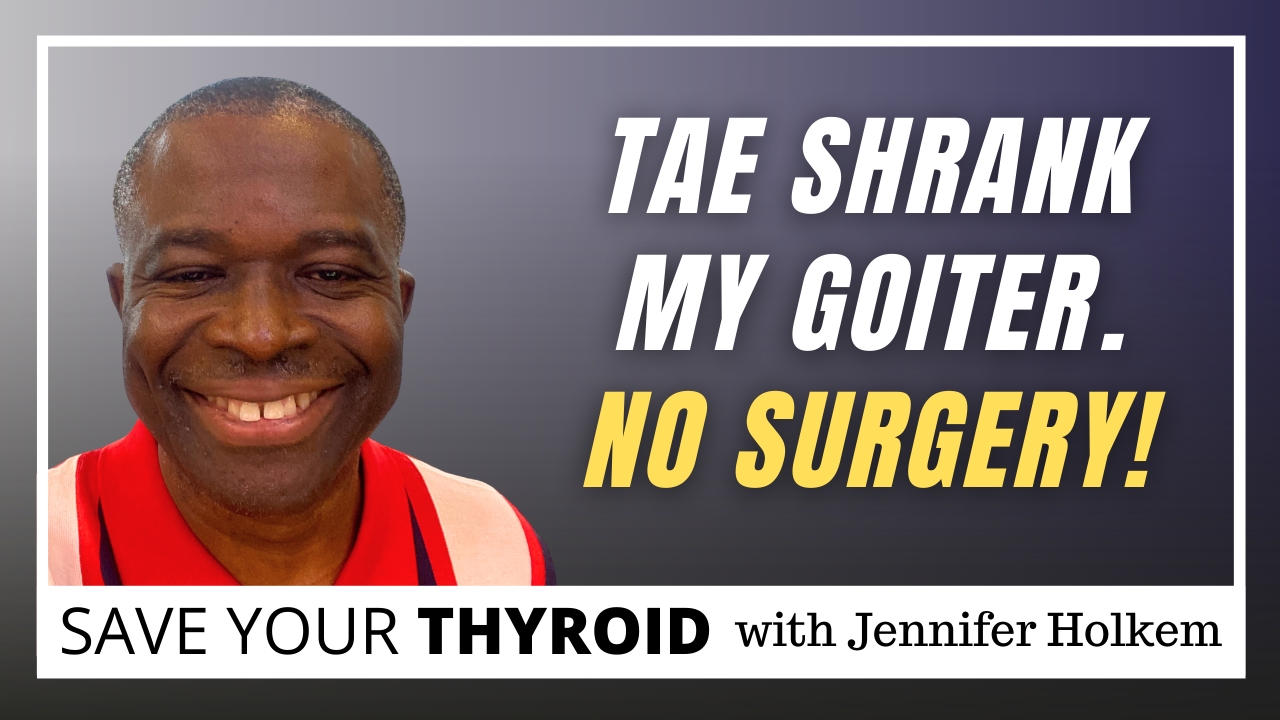
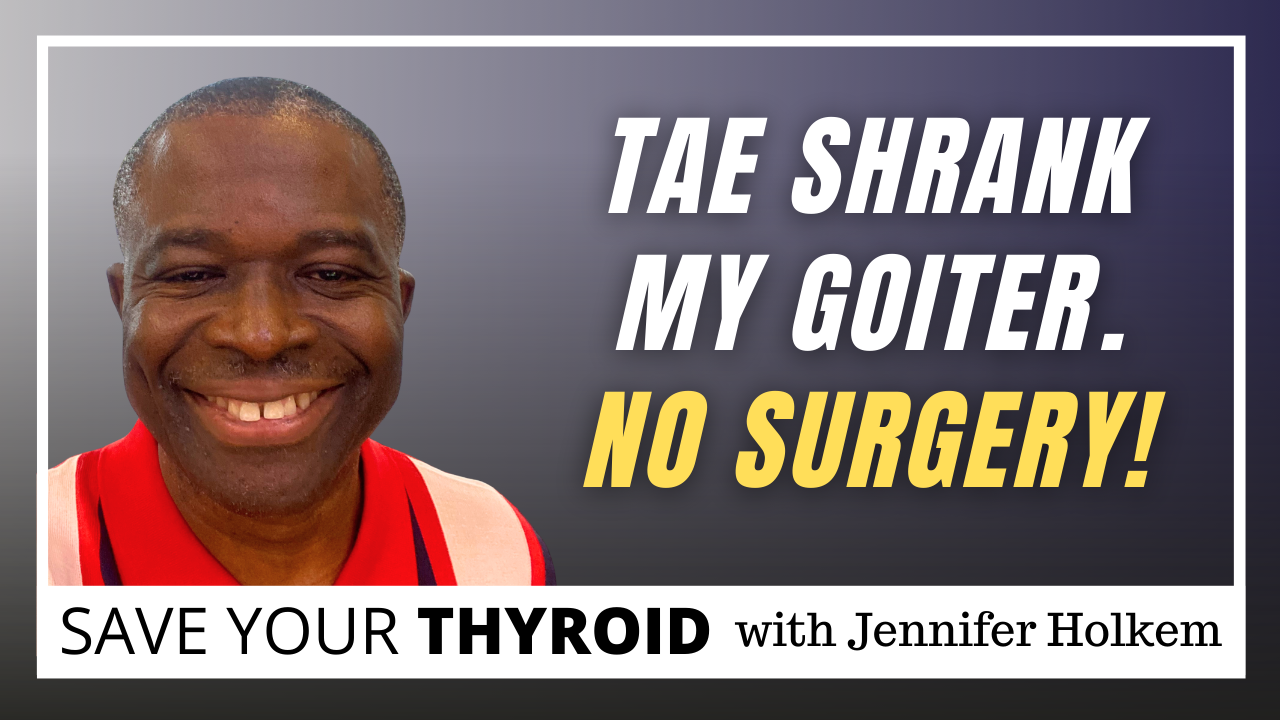
Escaping the Sternotomy: How Tosin Found a Non-Surgical Answer for a Massive Goiter
In 2016, a routine medical checkup revealed a growth on Tosin’s thyroid. Like many patients with an asymptomatic multinodular goiter, his initial strategy was simply to monitor it. He felt fine, and the idea of removing his thyroid—and committing to a daily hormone pill for the rest of his life—was completely unappealing.
For years, ultrasound scans of his neck showed a relatively stable situation. But a few years later, a strange, nagging pain behind his left shoulder prompted him to get a full chest CT scan.
The results were staggering. His goiter hadn't stopped growing; it had simply grown downward. The mass had extended deep into his chest (the mediastinum), pressing heavily against his windpipe and his lungs. The situation had escalated from a cosmetic inconvenience to a major medical crisis.
Because of the massive size and deep location of the goiter, standard thyroid surgery was no longer an option. His doctors told him the only way to remove it was through a sternotomy—a highly invasive, traumatic surgery that involves cracking open the sternum and ribs to access the chest cavity.
Tosin was staring down months of painful recovery and a lifetime dependency on synthetic thyroid hormones. He knew he had to find another way.
The Search for a Better Option
Driven by curiosity and a fierce desire to protect his long-term health, Tosin began exploring his alternatives. He initially looked into ethanol ablation, a fantastic non-surgical option, but his doctors quickly determined his goiter was far too large for the procedure to be effective.
However, his Houston-based medical team was open-minded. They connected him with Dr. Juan Camacho, an interventional radiologist based in Sarasota, Florida, who specializes in a procedure perfectly suited for massive goiters: Thyroid Artery Embolization (TAE).
Despite living in the medical epicenter of Houston, Tosin realized the innovation he needed was a plane ride away. After a deeply transparent consultation with Dr. Camacho, where both the risks and the immense benefits were laid out on the table, Tosin canceled the idea of a sternotomy and booked a flight to Florida.
What is TAE Actually Like?
For patients facing TAE, the fear of the unknown is often the biggest hurdle. TAE is radically different from traditional ablation. Instead of inserting a needle directly into the neck to burn the nodule, TAE works by cutting off the blood supply that feeds the overgrown tissue.
Tosin's experience was incredibly smooth. The procedure is performed in an outpatient setting under "twilight" sedation. Tosin wasn't intubated or completely unconscious; he was relaxed, drifting in and out of sleep, watching what he jokingly called "The Matrix." The medical team used advanced, real-time imaging on multiple screens to carefully thread a catheter through an artery in his wrist, navigating it all the way up to his thyroid.
Once there, Dr. Camacho injected tiny particles to block the specific arteries feeding the massive goiter.
The entire process took just a few hours. There were no cracked ribs. There were no neck incisions. By the early afternoon of his procedure day, Tosin was discharged. He flew back to Houston over the weekend and was back to working remotely by Monday.
The Road to Shrinkage
When the blood supply to the goiter is cut off, the excess tissue begins to die. As that tissue breaks down, it releases all the stored thyroid hormones it was holding inside.
Because of this, Tosin experienced a completely normal, expected side effect: a temporary and expected bout of transient hyperthyroidism. His heart rate elevated, and his TSH levels dropped to near zero. Thankfully, his medical team was prepared. With close remote monitoring and temporary medication to manage his heart rate, Tosin navigated this transition period smoothly. Within a couple of weeks, his heart rate normalized, and he was able to stop the medication.
Then came the magic.
TAE is not an overnight fix—it is a gradual process of the body reabsorbing the dead tissue. Dr. Camacho had prepared Tosin to expect a 30% reduction over three to six months. But at his three-month scan, the goiter had already shrunk by a staggering 60%.
By six months? It had shrunk by over 80%.
Even better, Tosin’s TSH levels had completely normalized for the first time in years. The hyperactive portion of his goiter was gone. He didn't need any follow-up ablations, and he was officially discharged from Dr. Camacho's care.
Knowledge is Power
Tosin’s story is a profound reminder of what happens when a patient refuses to accept the first terrifying answer they are given. By leaning into his curiosity, he avoided a traumatic surgery, kept his thyroid fully functional, and preserved his quality of life.
If you are staring at a diagnosis that feels overwhelming, Tosin’s advice is simple: Knowledge is power.
Seeking a second opinion or looking for non-surgical options is not an insult to your current doctor. It is a necessary step in protecting your future. Keep an open mind, seek out the experts, and remember that you are the one who has to live with the consequences of your medical decisions. You have every right to find a treatment that works for you.
To hear Tosin’s full story, the details of his cross-country medical collaboration, and his advice for fellow patients, hit play on this episode. And if you're looking for a physician who performs TAE, check out the directory at SaveYourThyroid.org.

From Thyroidectomy to TAE: How One Woman Avoided Surgery and Kept Her Thyroid