Thyroid Nodules, Iron Toxicity & The Copper Connection w/ Morley Robbins
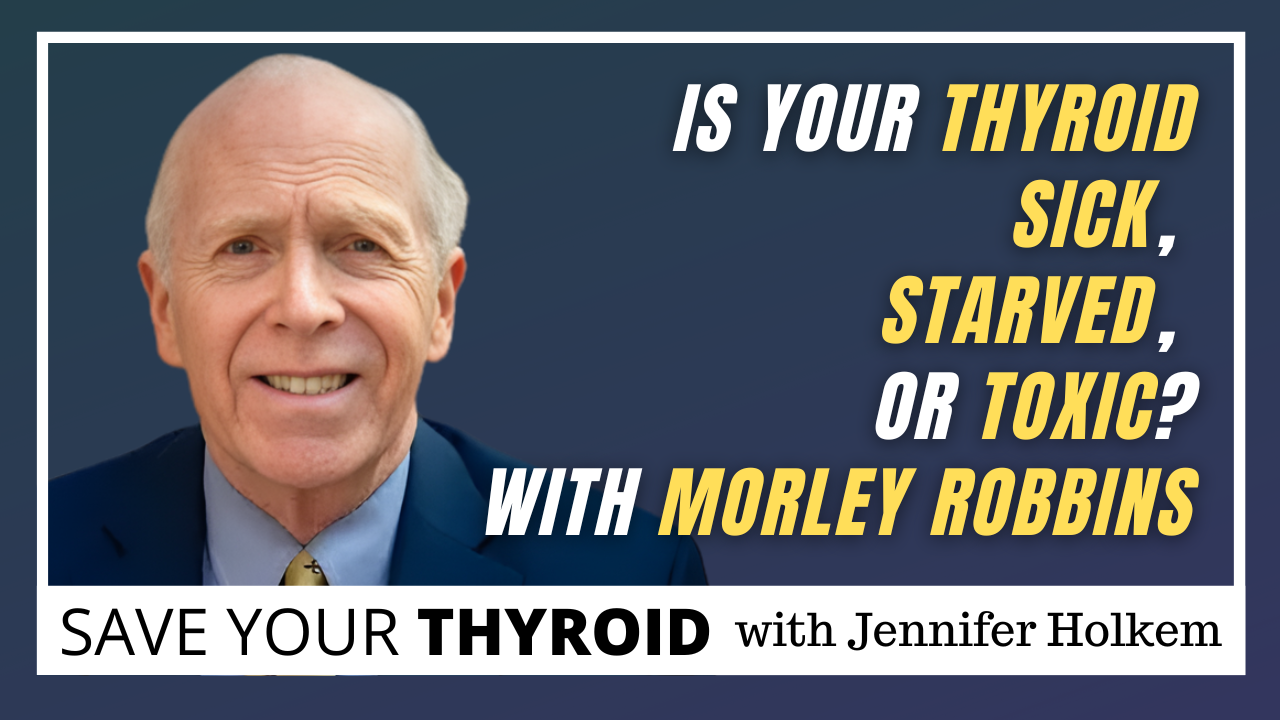
When I first heard Morley Robbins on a podcast, I’ll be honest: I was offended. I’ve been in the thyroid advocacy space going on seven years, and I thought I had a solid handle on the science. But as I listened to Morley make statements about iron, vitamins, and minerals that contradicted everything I "knew" to be true, I wanted to turn it off. I resisted it.
But my curiosity kept nagging at me. I went back and listened again. I bought his book, Cu-RE Your Fatigue, and I started looking for the "receipts." What I found wasn't just a different opinion—it was a deep dive into thousands of peer-reviewed studies that modern medicine has largely fragmented. I realized that the discomfort I felt was simply the growing pains of unlearning.
In this episode of Save Your Thyroid with Jennifer Holkem, I’m joined by Morley Robbins—a man I now call a "dedicated historian of medical literature"—to answer a question that could change everything for you: Is your thyroid actually broken, or is it simply starving for the minerals it needs to function?
The Blacksmith in Your Cells
We’ve all been taught that mitochondria are the "powerhouse of the cell." But Morley reframed this for me in a way that makes so much more sense. He calls them smithies.
Think of your mitochondria as a blacksmith’s forge. They aren't just sitting there making energy; they are working with metals like iron all day and night. They are busy manufacturing neurotransmitters, recycling calcium, and making iron-sulfur clusters. The energy they produce isn't just for you to go for a run—it’s the power source for the factory itself.
Inside that "forge," there is a critical enzyme called cytochrome c oxidase. Its job is to turn oxygen into water to release energy. The catch? It is 100% copper-dependent. Without enough copper, the forge goes cold, and your "cellular energy" tanks.
The Great Iron Myth
For years, I’ve heard from patients who are frustrated by low ferritin levels. They’re told they’re "anemic" and need iron supplements or infusions. But Morley’s research points to a different reality: a distribution problem, not a supply problem.
The human body is a closed-loop recycling system. Every 24 hours, we need 25mg of iron to replace 200 billion red blood cells. 24 of those 25 milligrams are recycled from within. We only need one tiny milligram from our diet.
When iron looks low on a blood test, it’s often because it is trapped in the tissues, "rusting" our organs because we lack the Copper Doorman (a protein called ceruloplasmin) to move it back into the blood. Giving more iron to a body that can't move it is like trying to fix a traffic jam by adding more cars.
Thyroid Nodules: Could they be "Zombie Cells"?
One of the most startling moments of our conversation was connecting the dots on why thyroid nodules may form. Most adults—up to 80%—will develop a nodule in their lifetime. We’ve been told to "watch and wait," but what if we looked at the mechanism?
Healthy cells are supposed to die through a clean process called apoptosis. This "kill switch" is triggered by the mitochondria. However, research published in Endocrinology shows that cells in benign goiter nodules are actually resistant to apoptosis.
They lose their capacity to die. They become like "Zombie Cells" (senescent cells).
Why? Because if the mitochondria are iron-toxic and copper-deficient, they can't release the chemical signal (Cytochrome C) needed to activate the "recycling" enzymes. The cells stay "offline," clumping together to form nodules. A 2024 study in Frontiers in Endocrinology even confirmed that iron levels are positively associated with the risk of developing these nodules.
Stepping Outside the Traditional Model
Morley’s message to my community is one of radical empowerment: "Ignore the enemies, ignite the energy." We have been trained to believe the thyroid is the "gas pedal" of the body, but Morley views it as an oxygen sensor. When T3—the active thyroid hormone—senses that energy production is failing due to mineral imbalances, it sends a signal for more copper-dependent help.
Since I began implementing the Root Cause Protocol (RCP) and focusing on bioavailable copper and retinol, I’ve personally seen the shift. I’ve actually been able to decrease my own T3 medication because my body is finally getting the raw materials it needs to run the "forge."
Actionable Solutions: The Stops & Starts
If you want to stop the "rusting" and start the healing, here is where Morley suggests we begin:
STOP: Iron supplements, synthetic Vitamin C (ascorbic acid), and high-dose Zinc—all of which can inadvertently crash your bioavailable copper.
START: Sources of bioavailable copper like bee pollen and grass-fed beef liver.
START: Whole-food Vitamin C and cod liver oil to provide the Retinol (Vitamin A) required to make copper work.
Ready to Learn More?
Listen to our full conversation on the Save Your Thyroid with Jennifer Holkem podcast, where we discuss everything from the "Mailroom Metaphor" of medicine to why your TSH might be "screaming" for copper.
If you are currently facing a thyroid surgery recommendation and want to explore how non-surgical options can change your path, join our community at saveyourthyroid.org.
To stay up to date on new episodes—including our upcoming "Full Monty" lab interpretation with Morley—subscribe to the mailing list at saveyourthyroidwithjen.com.

From Thyroidectomy to TAE: How One Woman Avoided Surgery and Kept Her Thyroid