Do You Really Need Thyroid Surgery? 3 Patient Cases from Weill Cornell Surgeons
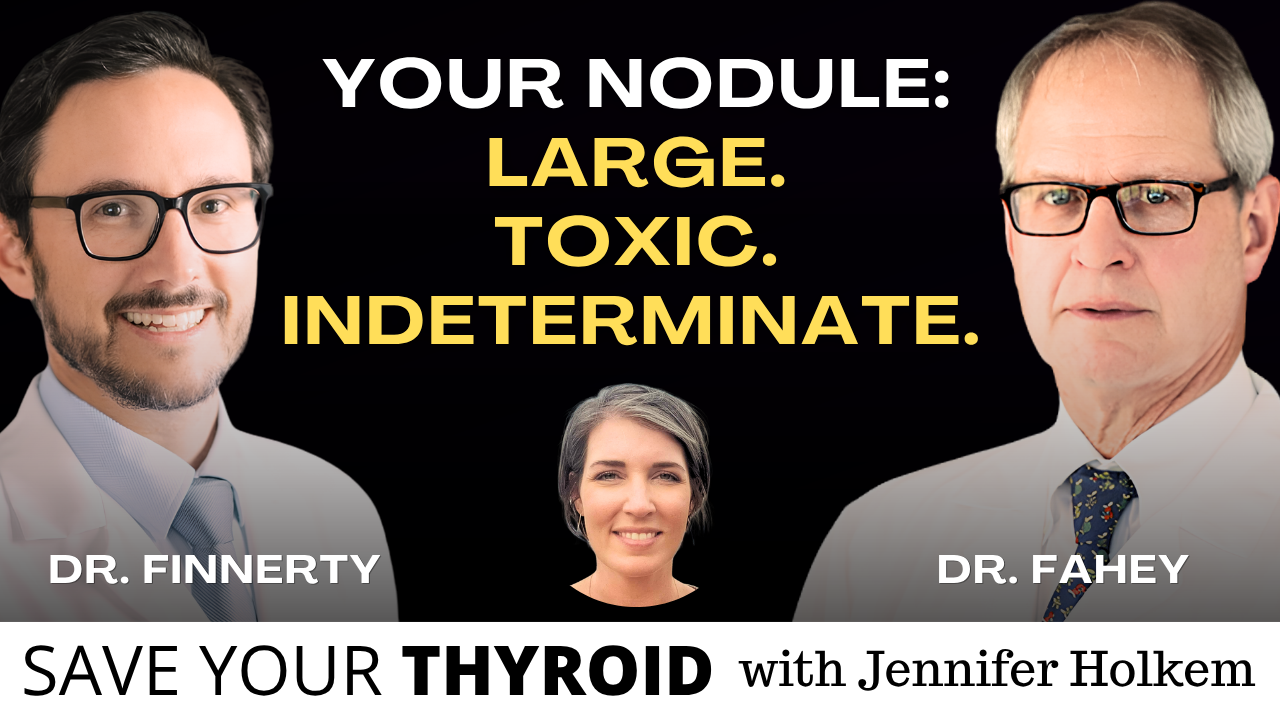
SAVE YOUR THYROID with Jennifer Holkem, episode 131
If you’ve been told you have a thyroid nodule or thyroid cancer, chances are the very first treatment option you heard about was surgery.
My guests this week want you to know that surgery isn’t always the answer, and it hasn’t been for years.
Dr. Thomas Fahey and Dr. Brendan Finnerty are endocrine surgeons at Weill Cornell Medicine in New York. They have spent the better part of a decade building a high-volume ablation program. They treat benign nodules, toxic nodules, and carefully selected thyroid cancers, many without surgery at all. Even so, something they told me stuck with me: many of their patients don’t hear about ablation from their own doctors. They find it on their own.
So in Episode 131, we’re doing something a little different. Instead of talking in generalities, we walk through three patient cases this community sees all the time. For each one, we ask the same question: does this patient really need surgery?
Welcome back to Save Your Thyroid with Jennifer Holkem. This is the space where we bridge the gap between the standard of care and the future of medicine. My mission is to empower you with the knowledge you need to avoid unnecessary surgery and keep your thyroid intact for the long haul
🎧 In today’s episode, we’re covering:
-
Why you don’t need to rush. What newly diagnosed patients most need to hear, and how much time they actually have to research their options.
-
Patient A: the large, compressive nodule. What makes someone a strong ablation candidate, and the 4 cm size threshold Dr. Finnerty uses as a starting point.
-
Patient B: the toxic nodule. Why physicians disagree about ablation for toxic nodules, and why trying it first doesn’t burn any bridges.
-
Patient C: the indeterminate nodule. Why molecular testing should come before any treatment decision, and the four factors that determine ablation candidacy.
-
Ablating thyroid cancer. How treating a low-risk cancer differs from treating a benign nodule.
-
Why nodules happen. What Dr. Finnerty’s research says about whether you could have prevented them (spoiler: you couldn’t).
-
The next generation of surgeons. How Dr. Fahey is training surgical residents in ablation, and why he calls it the next step in surgery’s evolution.
Whether you’ve just been diagnosed, been told surgery is your only option, or been handed an “indeterminate” result with no clear next step, this episode is for you.
Meet the Guests
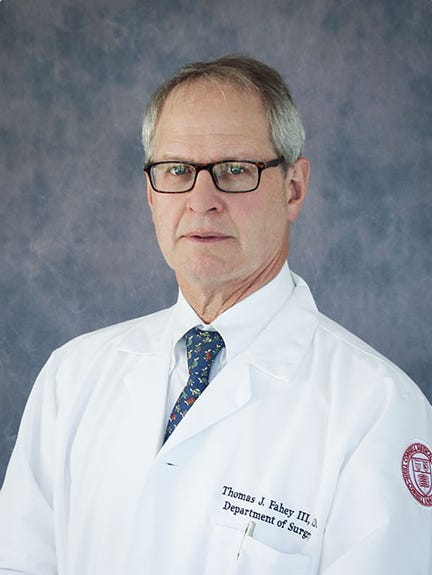
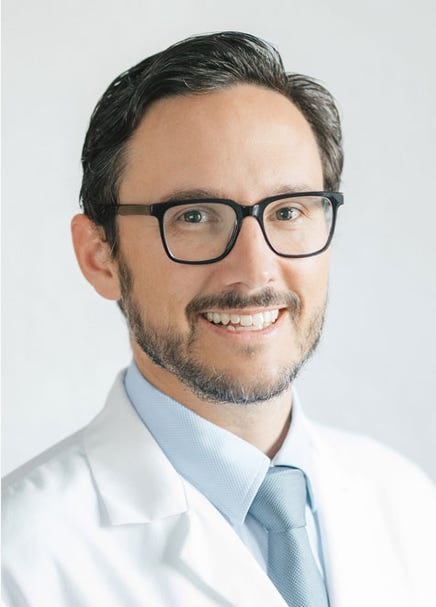
Dr. Thomas Fahey is Chief of Endocrine and Minimally Invasive Surgery and Professor of Surgery at Weill Cornell Medicine, where he has practiced for nearly three decades. He played an instrumental role in developing molecular testing for indeterminate thyroid nodules. As surgery residency program director, he also built new pathways for surgical residents to learn interventional techniques like ablation.
Dr. Brendan Finnerty is an Associate Professor of Surgery and Director of Interventional Endocrine Surgery at Weill Cornell Medicine. He treats thyroid, parathyroid, and adrenal disease both surgically and non-surgically, including radiofrequency and ethanol ablation for carefully selected nodules, cysts, and cancers. He also leads research into the mechanisms of tumor growth and metastasis.
Why Is Ablation Still Treated Like a Niche Option?
Ablation has been practiced in Europe and Asia for many years. Even so, many patients, some physicians, and a lot of insurance companies still treat it as niche or experimental.
Dr. Fahey says the biggest reason is timing. Ablation took years to gain approval in the United States, and acceptance here lagged behind as a result. In the meantime, patients have been closing the gap themselves. Most of the patient volume at Weill Cornell is now patient-driven rather than physician-driven. People are doing their homework, finding communities like ours, and arriving at their consults well-informed.
First, Take a Breath
This is something I see constantly in the Save Your Thyroid Facebook community. A newly diagnosed patient joins, terrified that they’ve just received a death sentence and that they have to decide on treatment right away.
Dr. Finnerty was direct about this:
“No one should be rushing to the operating room.”
Most thyroid nodules are benign. Nearly all patients have plenty of time for a thorough, individualized workup before choosing a treatment. A nodule that truly needs urgent treatment is rare, and it usually becomes obvious at the very first visit.
Most nodules are found incidentally, so patients go from thinking everything is fine to thinking they’re dying. That’s emotional whiplash. You have time to figure this out.
What Makes a Great Ablation Candidate?
Dr. Fahey emphasized that every treatment decision should be a shared one between patient and physician. With ablation, patients need to understand two things going in.
First, the nodule may not disappear completely. Second, ablation treats the nodule directly while preserving everything around it.
“We can directly treat a nodule and not remove or destroy any surrounding normal thyroid.”
A great candidate has a nodule that is causing symptoms. Those symptoms might be compressive: a lump-in-the-throat sensation, a visible ball in the neck, or a friend or loved one pointing it out. They might also be hyperthyroid symptoms from a toxic nodule, like sweating, insomnia, and heat intolerance.
Patient A: The Large Nodule Causing Pressure
Patient A has a large, benign nodule causing pressure symptoms and wants to know whether she’s a candidate for a non-surgical option.
But what counts as “large”? Two centimeters? Eight? Dr. Finnerty uses 4 cm as a starting point with patients. Below that size, he can usually be confident that a symptomatic patient will get strong volume reduction and real improvement in quality of life. Above 4 cm, patients still often improve, but the volume reduction may be less dramatic, and some may need additional treatment if symptoms persist.
Verdict: Patient A is a good candidate. Dr. Fahey noted that large nodules causing pressure are great candidates for ablation. Once they reach five, six, or seven centimeters, a second treatment may be needed for optimal results.
I know this one personally. My nodule was over 4 cm, and I had two RFAs in a staged approach. Some people call it the “iceberg effect”: the top portion is treated, and the lower portion rises up as the top shrinks. I ended up with a 90% reduction, and I was so grateful to have that option.
Patient B: The Toxic Nodule
Patient B has a toxic nodule that overproduces thyroid hormone. His own doctors don’t agree on whether ablation is the right call, but he’d like to try it before surgery or radioactive iodine.
Physicians really do disagree here. Dr. Fahey explained that ablation introduces a fourth option alongside medical therapy, radioactive iodine, and surgery. Its cure rate isn’t 100%. Still, he pointed out an important advantage:
“You can choose to have a second treatment even when it fails, and you haven’t really burned any bridges.”
Patients who are significantly hyperthyroid are usually on antithyroid medication anyway. That gives them room to attempt a second ablation before moving to something more permanent.
Dr. Finnerty added that the literature supports a clear pattern. The more you can shrink a toxic nodule, the better your chance of curing the hyperthyroidism. Larger toxic nodules are more likely to need a second treatment.
Verdict: Ablation remains a great option for Patient B, as long as he understands the cure rate isn’t 100% and he may need a second procedure. Dr. Finnerty also noted the other side of the equation. Surgery carries its own risk of becoming hypothyroid and needing levothyroxine for life. For a patient motivated to preserve his thyroid, ablation is probably the best option, ideally decided with input from all of his providers.
Ablating Thyroid Cancer: Same Procedure, Higher Stakes
Technically, ablating a cancerous nodule is essentially the same procedure as ablating a benign one. What changes is everything around it.
First, the cancer has to be one that appears low-risk for spreading and recurring. A larger, more aggressive-looking tumor isn’t appropriate. Second, the proceduralist has to make sure every portion of the cancer is treated. That’s harder to confirm, because the physician is guided by the ultrasound changes they can see in real time during the procedure.
Location matters as much as size. A cancer near the edge of the thyroid, close to a critical structure, makes Dr. Finnerty less enthusiastic about ablation. A tumor in the middle of the gland with a buffer of normal thyroid around it is a much better fit.
On size, ablation for cancers 1 cm or smaller is well studied and established as safe and effective. Dr. Finnerty personally feels comfortable evaluating tumors up to 1.5 cm, provided the anatomy allows a safe, effective treatment. He also noted that some small, low-risk cancers qualify for active surveillance. Ablation can be a middle path for patients who aren’t comfortable with watching but don’t want surgery either.
Patient C: The Indeterminate Nodule
Patient C has an indeterminate nodule, meaning the pathologist can’t say for certain from the cytology whether it’s benign or malignant. After learning about molecular testing on her own, she wants to know why surgery was offered and molecular testing wasn’t.
This one hits close to home. Most of the patients I see in my patient navigation consults have indeterminate nodules. Many of them say the same thing: “I had an indeterminate nodule and they just told me I needed surgery.” No mention of molecular testing at all.
Dr. Fahey, who helped develop molecular testing for indeterminate nodules, was clear:
“I certainly wouldn’t proceed directly to surgery, or for that matter proceed directly to saying this is something we can just watch.”
He believes molecular testing should be part of every indeterminate workup in the United States, even if it requires a repeat biopsy. That’s especially true for nodules larger than two or three centimeters. He calls ablation for indeterminate nodules one of the great frontiers in thyroid nodule treatment.
The four factors. Dr. Fahey weighs four things when deciding whether an indeterminate nodule can be ablated:
-
Age. A younger patient may live with the nodule for 50 or 70 more years. That can mean decades of follow-up ultrasounds and possibly repeat biopsies, which may make ablation less appealing. An older patient has less time to worry about it.
-
Size. Smaller nodules are more likely to be completely ablated. Larger nodules can also have more variability in their cells, which a molecular test may not fully capture.
-
Location. Nodules at the back of the thyroid, near the nerve to the vocal cords, may not be ablated as completely.
-
Molecular profile. Mutations associated with more aggressive disease, especially in a younger patient, would steer Dr. Fahey toward surgery so the nodule can be fully evaluated by pathology.
What if the molecular test comes back benign? Traditionally, those nodules are simply observed. But for a patient who doesn’t want to follow a nodule forever, ablation may be an excellent alternative. Weill Cornell has treated patients in exactly this situation.
When they do ablate an indeterminate nodule, they treat it the same way as a cancer: the entire nodule, including the capsule. Even low-risk mutations can develop into something more serious over time.
Verdict: Patient C should have had molecular testing before any decision was made. If your doctor didn’t mention it, ask why. You might have to ask for it, and your doctor might not be familiar with it, but this testing exists, and it matters.
Want to go deeper? Check out my episode with Dr. Joshua Klopper from Veracyte on molecular testing.
“Why Did I Get These Nodules?”
This is probably the most common question I hear from people who feel they’ve done everything right: eating well, sleeping well, living healthy, and still ending up with thyroid nodules.
Dr. Finnerty hears it almost every day. The honest answer is that we don’t know exactly why benign nodules develop. We do know they’re extremely common: 20 to 40 percent of people have them.
“It’s certainly nothing that they’ve done or exposed themselves to that are promoting their growth.”
Unfortunately, there’s also no lifestyle change that will shrink them. Dr. Finnerty’s lab is studying the molecular changes behind nodule and cancer growth. The goal is better biopsy-level testing that can tell a low-risk tumor apart from an aggressive one. That could someday make treatment decisions far more certain.
That certainty matters. The biggest source of anxiety I see in patients is the fear of making the wrong choice. Is ablation enough? Is surgery overkill? Will I regret being on thyroid hormone for life? Knowing your nodule’s risk with greater confidence would let patients rest easier with the choice they make.
Training the Next Generation of Surgeons
Dr. Fahey helped build a pathway for surgical residents to train in interventional techniques. He sees surgery and interventional radiology as converging fields, each with a lot to offer the other.
“A gallbladder operation used to be a five-day hospital stay. I think ablation is the next step in the evolution of that.”
His point is that ablation should be part of the full picture any physician or surgeon can present to a patient. I’ve only interviewed two physicians who were exposed to thyroid ablation during their training. I look forward to the day when that number is much, much higher.
Where This Field Is Headed
Both surgeons expect ablation’s use to keep growing. Proceduralists are becoming more comfortable with it, and patients are walking into their appointments asking about it. As molecular testing becomes more widespread and sophisticated, Dr. Fahey believes a single needle biopsy will increasingly show which nodules are real threats and which can be treated without surgery.
As Dr. Finnerty put it, many patients will ultimately avoid the operating room as we keep learning more.
Watch this episode on YouTube, or download it for offline viewing on YouTube Music!
[Click the thumbnail above to watch on YouTube!]
Save Your Thyroid with Jennifer Holkem is now available on all major podcast platforms!
Visit my new podcast website, SaveYourThyroidwithJen.com!
Key Takeaways from Episode 131:
-
You have time. Most nodules are benign. Don’t rush into surgery.
-
Ablation shrinks, it doesn’t always erase. It also preserves your healthy thyroid.
-
Size sets expectations. Under 4 cm usually shrinks well; larger nodules may need a second treatment.
-
Toxic nodules have a fourth option. Ablation can be repeated before moving to surgery or radioactive iodine.
-
Indeterminate? Get molecular testing first. Do it before deciding on surgery or watching.
-
Some low-risk cancers can be ablated. Small tumors in safe locations are the best fit.
-
Your nodule isn’t your fault. Up to 40% of people have them.
For more on nonsurgical thyroid nodule treatments like RFA, microwave ablation, TAE, and nsPFA, be sure to subscribe!
AND, don’t forget to visit my website:
👉 SaveYourThyroidwithJen.com
There, you can also sign up for personalized one-on-one patient navigation, because no one should feel alone on their thyroid journey.
Connect with Dr. Thomas Fahey and Dr. Brendan Finnerty at Weill Cornell Medicine:
🔗 Request an appointment: https://weillcornell.az1.qualtrics.com/jfe/form/SV_3VFFcsKx0Z3RvEh
Phone: 646-962-5250
Dr. Fahey: tjfahey@med.cornell.edu
Dr. Finnerty: bmf9002@med.cornell.edu
Find a physician near you:
🔗 saveyourthyroid.org
Book a patient navigation consult:
🔗 saveyourthyroidwithjen.com/p/patient-navigation-services
Please consider supporting my work. Every donation is sincerely appreciated!
Find a physician, explore treatment options, and join our patient community here:
Disclaimer: None of the statements made in this or any other blog/video by “Its me Jen again” should be considered medical advice.
The goal of this podcast and blog
I seek to provide data, resources, and expert opinions on the topic of thyroid nodules, and make it accessible to patients. When I was first looking for thermal ablation treatment, everything that I read was physician-facing material. It was very hard for me to understand. This material is meant to help patients understand what’s going on in their thyroid gland and what an important gland it is. If you can keep your thyroid intact, that’s going to help you live a longer, healthier life, and preserve your quality of life. Thanks for reading this far today! — Jen
Why RFA Sometimes Fails on Toxic Thyroid Nodules — And What Works Instead | Dr. Salem Noureldine


 Goodpods

