
 Amazon Music
 Apple Podcasts
 Audible
 Castbox
 Deezer
 iHeartRadio
 PocketCasts
 RSS Feed
 Spotify
 YouTube
 Youtube Music
  Goodpods
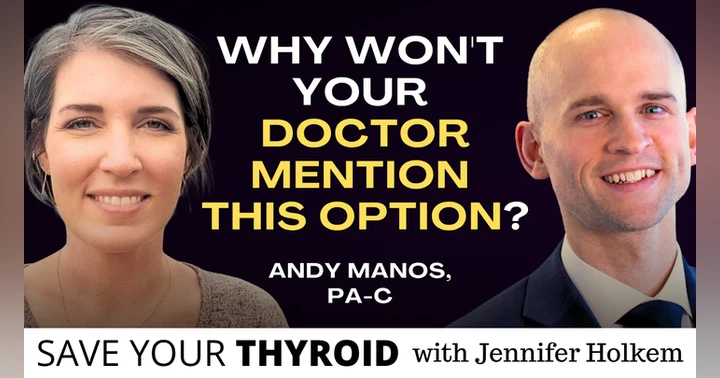
 The PA Who's Bringing Thyroid Ablation to Your Community | Andy Manos & North Star Vascular
Most patients diagnosed with a thyroid nodule are offered two options: watch it or remove it. Andy Manos, PA-C is on a mission to make sure a third option reaches every community in the country.
As a physician assistant and VP of Internal Growth at North Star Vascular Interventional in Minneapolis, Andy performs thyroid radiofrequency ablation in a community-based interventional radiology clinic — no hospital required, no general anesthesia, same day in and same day out. In this episode he joins Jennifer Holkem to pull back the curtain on why so many patients are never told about nonsurgical options, how financial incentives can push physicians toward surgery, and what a single question can do to change the entire direction of a thyroid consultation.
He also breaks down thyroid artery embolization using the most accessible analogy I've ever heard — a water balloon, a garden hose, and a Costco run — and explains why the sub-stern
In this episode:
✅ Why interventional radiology is reinventing itself as a surgical-style specialty
✅ How North Star Vascular is bringing organ-preserving thyroid care to the community
✅ The financial incentives that can push providers toward surgery over ablation
✅ Why RFA and thyroid surgery carry similar risks to the recurrent laryngeal nerve
✅ The water balloon analogy that finally makes TAE make sense
✅ Which nodules are the best candidates for TAE — including sub-sternal goiters
✅ Why asking "is there any other option?" is the most powerful thing a patient can do
✅ How AI and the internet are becoming legitimate tools for thyroid patient advocacy
✅ The organ-preserving medicine movement happening across thyroid, uterus, and prostate
If you've only been offered surgery or watchful waiting — this episode is for you.
🔗 Learn more about Andy Manos and North Star Vascular Interventional:
northstarir.com
IG: https://www.instagram.com/northstarir_/
FB: https://www.facebook.com/NorthstarVascular
What if the doctor who could save your thyroid isn't a surgeon or an endocrinologist — but a physician assistant working out of a community clinic with no hospital required?
Meet Andy Manos, PA. As VP of Internal Growth at North Star Vascular Interventional in Minneapolis, Andy is on a mission to bring minimally invasive thyroid care — including radiofrequency ablation and thyroid artery embolization — directly to patients in the community, outside the walls of a hospital system.
In this episode, Andy pulls back the curtain on why so many patients are never told about nonsurgical thyroid options, how financial incentives can push providers toward surgery, and what you can do right now to advocate for yourself — even if your doctor has never heard of RFA or TAE.
He also breaks down thyroid artery embolization in the most accessible way I've ever heard it explained — using a water balloon, a garden hose, and a Costco run as his props.
In this episode:
✅ Why interventional radiology is reinventing itself as a surgical-style specialty
✅ How North Star Vascular is bringing organ-preserving thyroid care to the community
✅ The financial incentives that can push providers toward surgery over ablation
✅ Why RFA and thyroid surgery carry similar risks to the recurrent laryngeal nerve
✅ The water balloon analogy that finally makes TAE make sense
✅ Which nodules are the best candidates for TAE — including sub-sternal goiters
✅ Why asking "is there any other option?" is the most powerful thing a patient can do
✅ How AI and the internet are becoming legitimate tools for thyroid patient advocacy
✅ The organ-preserving medicine movement happening across thyroid, uterus, and prostate
If you've only been offered surgery or watchful waiting — this episode is for you.
🔗 Learn more about Andy Manos and North Star Vascular Interventional:
northstarir.com
IG: https://www.instagram.com/northstarir_/
FB: https://www.facebook.com/NorthstarVascular
📌 Resources:
👉 Podcast: https://www.saveyourthyroidwithjen.com/
👉 Patient site: https://www.saveyourthyroid.org/
👉 Private FB group: https://www.facebook.com/groups/saveyourthyroidnonsurgical
👉 Patient Navigation: https://www.saveyourthyroidwithjen.com/p/patient-navigation-services/
💛 Support the channel:
PAYPAL 👉 https://www.paypal.com/paypalme/itsmejenagain
VENMO 👉 https://account.venmo.com/u/itsme_jenagain
🛍️ Affiliate links:
🌿 TOUPS AND CO: https://toupsandco.com/jen
🎙️ RIVERSIDE: https://www.riverside.fm/?via=itsmejenagain
🧴 VAN MAN: https://vanman.shop/?ref=itsmejenagain
💡 BON CHARGE: https://us.boncharge.com/?rfsn=7843863.50b9fa&shpxid=4137e8a5-8199-46cb-b71c-0f86d29924ff
⚠️ Disclaimer:
This podcast is for informational purposes only and is not a substitute for professional medical advice. No endorsement is given or implied for any specific product, treatment, or physician mentioned. Always consult with a qualified healthcare professional regarding your individual medical needs.
🎵 Music licensed through Soundstripe:
GTSWDIS1SJVGFXAJ
PMUVDSCJNSMIK83L
STEMG7LBEAKBQU6O
Its Me Jen Again (00:00)
You're listening to Save Your Thyroid with Jennifer Holkem the podcast where we explore
thyroid-spearing treatments, advocate for patient empowerment,
and help you get back to the life you love without the need for unnecessary surgery. Today, I want to introduce you to someone I met at the NASIT conference in Portland, Oregon.
Andy Manos is a physician assistant and healthcare executive who is passionate about changing
the landscape of minimally invasive thyroid care. As the VP of internal growth at North Star Vascular Interventional in Minneapolis, Andy works tirelessly to expand patient access to life-changing
non-surgical options like thyroid radiofrequency ablation and thyroid artery embolization.
With over a decade of clinical experience in interventional radiology, Andy is a passionate champion for patient education and innovative care models. He's dedicated to helping patients resolve their symptoms while avoiding a scar, preserving their thyroid function, and skipping the long recovery. When he isn't advocating
for his patients, you can find him loading up his minivan at Costco, wrangling his three youngboys
and enjoying the lake or lacing up his running shoes.
He's an avid runner who's completed six marathons. Andy, welcome to the show.
Andy (01:09)
Thanks, Jen. Really happy to be here.
Its Me Jen Again (01:11)
Well, I really connected with the whole concept of being a Costco lover because that's actually something I am as well. We'll talk more about that later.
Andy (01:21)
I used to hate it. used to be against everyone
that said it. I think I was just jealous. But now I'm like, I could not be more obsessed with it.
Its Me Jen Again (01:26)
something else I heard when we were in Portland that I heard about you is that you had run 20 miles while we were at that meeting.
the NASIT meeting, just for anyone watching who's not familiar, NASIT stands for North American Society of Interventional Thyroidology. That's an organization solely dedicated to the advancement.
of minimally invasive thyroid treatment options. And Andy and I were both at that meeting in Portland back in February, really awesome meeting. And yeah, I'm sure you saw more Portland than I did since you were running
Andy (01:56)
a great way to see Portland, actually. And the only thing was I wanted
get the run done before the first session that I didn't want to miss.
It was a great run, beautiful weather, perfect weather, then run by the river in Portland was awesome.
Its Me Jen Again (02:06)
you know, that meeting was so great. And I feel like it was providential because that's how I met you and so many other wonderful physicians who are in this space now that is just exploding. We're seeing so much innovation and it's very exciting, which is why we're here today to talk about more advancements in this field. So like I was saying, you're an avid runner, a busy dad.
but in the clinic you're known as the thyroid ablation guy. So how did you find your niche specifically in this area of RFA and alcohol ablation for thyroid nodules? Because I know interventional radiology is kind of a broad area of medicine. You're treating all kinds of stuff.
Andy (02:43)
Yeah, that's a great question. So really it starts with Dr. Golzarian, who we'll talk about, I'm sure a few times, but he's the one who told me about it. He was excited about it. And as we were thinking of opening up our own practice to be able to offer these surgical alternatives out in the community, as opposed to in the basement of the University of Minnesota, he had said that I should start to look into it as he thinks it's something that I would like and something that I could do because he
really pushed for advanced practice providers, nurse practitioners and PAs at the U to have a practice at the U to do procedures that are a little higher prevalence, lot of procedures, lower risk. Let's have our PAs really get good at those. It's going to be a better patient experience, probably fewer complications, but it also helps the practice move along. So if you just to get through the day essentially. And he built that when he started at the U and I joined
In 2016, a team of two went to three, and by the time I left, we had
advanced practice providers. But there, just the opportunity to do ultrasound guided procedures, among other things, but a lot of biopsies, a lot of thyroid biopsies. So that was the start. And then he mentioned
conference, which was Dr. Park in Dallas. You may have heard of him.
Its Me Jen Again (03:52)
Yeah.
Andy (03:52)
And so I went there and it's like the from minutes of stepping in there, I just recognized like I
walked into this wonderful community. Everyone was aligned on providing an alternative that no one really knew about. It's not new, as you know, but I think it's newer to medical community. And I just became very passionate at that meeting, and then that basically pushed me to really start to try to build the practice here. And that's easy. It's fun to help people. Now that we've had the practice and people come, the follow-ups are super fun because that's what keeps me
Its Me Jen Again (04:20)
yeah.
Andy (04:20)
going.
people are like, can tell it's gone. know, can't, all my symptoms are gone. And that's great. So that's how it started. Started as an IRPA in the hospital and exposed to doing a bunch of procedures, which is super fun. And then it kind of made its way into this being able to provide one specific one, ultrasound guided,
thyroid ablation, whether it be alcohol or RFA here in our outpatient practice. And it's been great. I'm really lucky that Dr. G believed in me or pushed me that way. And it's, it's
It's great, it's really fulfilling.
Its Me Jen Again (04:47)
Yeah. And we're going to talk about your colleagues in just a moment, because you said some things to me via email about them that were just really incredible. And I want to bring attention to that. But let's talk a little bit about just the general field of interventional radiology for people who are not familiar, because it's not available in every community hospital in the country. know, we hear radiology. Oftentimes we think, we're just
talking about someone who looks at images, but interventional radiology,
intervening into something using imaging. So kind of give us a little bit more of a background on your field.
Andy (05:21)
Yeah, and you're right, people typically don't know what it is and then you say the word and you can barely say the whole thing and we abbreviate it.
Its Me Jen Again (05:26)
tongue-tied when I say it.
Andy (05:28)
And then they abbreviated IR and a lot people are like, what does that mean? Infrared? What is IR? So we have to do some of that explaining, but what's really happening in the field of interventional radiology is years ago we were a wing of radiology. So we were also radiologists
providers working in a dark room and reading images and people would order things and then we would just do them based on the order. But interventional radiology, and actually Dr. G is huge pioneer.
I'll refer him as Dr. but I'm a Dr. Jafar Golzarian is a huge pioneer in this movement. And that's fixing, no, no, no, we're more like surgeons. Like we want to avoid, we're talking about surgery, but very much our practice is more like surgery, surgical practice. And we're clinical, right? We should be seeing these patients before we do the procedures. We should be following the patients up. We should be having our clinics. We should be rounding in the hospital. Like we need to get out. We need to be more present. Like it's, you can't just because what we're doing is so,
impactful and
Its Me Jen Again (06:22)
Mm-hmm.
Andy (06:22)
we're getting asked to do a lot of things and we've kind of found our place where we're becoming a wonderful option for patients. And so we should be out and seeing those patients in clinic interacting with the referring providers. So we're kind of really making our own specialty.
So
Its Me Jen Again (06:36)
Mm-hmm.
Andy (06:36)
that was the push for, so interventional radiology, what is it? Yeah. So you use imaging or radiology, which would be X-ray, ultrasound, CT scans at times.
to do a therapeutic procedure. So you're going to use those things to help guide a needle into the right place, maybe put a drain into an infection, biopsy something, among many other increasingly complex things. What we like to say is when there's no other options on the table, they call interventional radiology and the innovation of our...
Field and the people that go into it can kind of just figure something out and that's that's really why the the field has grown so fast I think is because there's a lot of innovation in the space And it's super exciting there is Nothing, I will never forget the first procedure. I watched Just seeing the x-ray and how it's used It was just mind-blowing and immediately just grabbed inside of me like this is where you belong like you should be here So I will not forget that
And it's very exciting. It's no scars, same day going home quickly, like you're just small little needle pokes in the skin and band-aids. And oftentimes, it is scary because we're doing something, but oftentimes it can be done without sedation. mean,
Its Me Jen Again (07:38)
Mm-hmm.
Andy (07:38)
we can offer many things and have people return to work the same day. They don't have scars. It's a great alternative to surgery. And oftentimes the outcomes are similar. And that's super exciting. And I still feel like we're on the front end of...
cementing our place in the medical field
Its Me Jen Again (07:51)
Right.
Andy (07:52)
as people always know about us or inviting us to the table and remembering to tell their patients about things that we can do so they know the patients know all their options.
Its Me Jen Again (08:01)
I agree. think it's such an exciting field. And the fact that I saw you and many other interventional radiologists at the NASIT meeting was so exciting to me because I've been to several thyroid meetings over the years and I've never really seen a presence for those physicians. And so I feel like it's good, like you said, to have a seat at the table for all of you to be able to learn from each other. And you're doing these incredible procedures that a lot of the
surgeons and endocrinologists have no use of or experience with. So having your skill set there is such, I think it just brings such value to the community. And I think that, as you said, it's gonna continue to grow. And I hope for the future that we'll start seeing more ir clinics individually and have them separated from hospitals so that it's more accessible to people. Because like, for example, where I live,
I'm in Huntsville, Alabama. It's a major city. It's the largest city in Alabama now. And we don't have any interventional radiology in this area. The nearest one is at UAB in Birmingham. And I actually heard recently that they are going to be bringing on thyroid artery embolization there, which is very exciting because,
Andy (09:12)
Yeah.
Its Me Jen Again (09:13)
you know, several years ago, I actually went there for a consult for a simple kidney cyst to have it ablated with alcohol ablation.
And it was very, I won't go into the details, but it didn't go very well. The consult was highly disappointing. And I ended up actually having Dr. Park take care of that for me. So Dr. Park, you mentioned earlier, but
Andy (09:34)
Yeah.
Its Me Jen Again (09:34)
let's talk about your colleagues at North Star Vascular, Dr. Golzarian specifically, who was the first IR to perform prostate artery embolization.
back in 2012. I think this is so cool that you can embolize a prostate for a man who's dealing with an enlarged prostate. What is it like working in an environment with such forward thinking leaders and tell us a little bit about him.
Andy (09:59)
wow. It's incredible. His passion for interventional radiology and specifically PAE or prostate artery embolization is unmatched. Most, I think, people in their, at the end of their career as a professor or at an academic institution are going to become a tenured professor and kind of go right into retirement. And he was inspired to say, to recognize how
underserved the community is, like you mentioned, right? The access to what we offer is not enough, not even close. He wanted to take that on himself and joined his partner, Dr. Astani, like, we need to open a place that can do these types of, you know, organ preserving, let's just call it
Its Me Jen Again (10:35)
Yeah.
Andy (10:35)
that, So he was such a big believer in PAEs, like, I'm going to bring it to the community and I think I can do a lot more of them there. I can do them better, more efficient, a better experience where the patient's not navigating, you know, downtown Minneapolis or having to pay to park.
or the hospital system where they don't really know your name, perhaps those things that led your experience to be not the greatest. Like
Its Me Jen Again (10:54)
Yeah.
Andy (10:54)
we can really bring healthcare as it should be to patients in the community. So he did that and being asked to join him to do that was like very flattering. You know, his belief in me that I could help him kind of build this thing from scratch, which has been stressful at times too. These two, their vision is incredible and these are amazing guys with huge hearts.
And what they think of in the discussions that we have are like I have learned so much and it's so inspiring to be with them So I'm very lucky to be here. What's it like to be with him? He still loves PAE. He's constantly, he'll text me I don't know maybe once a week or once a month asking about outcomes like he really wants to know the outcome and we track all of our patients So he still takes his academic mind to everything so know private practices sometimes might just try to you know Have a good relationship to do PAE and do a bunch of PAE
and they know it's going to help patients, but they're not going to want to be involved in pushing the procedure or our field forward when Dr. G is very much that way. So he's, how can we push PAE? How can we make PAE better? How can we expand so more people know about PAE? And you're going to hear this across all the other things, like thyroid eventually is, we're doing that right now, pushing thyroid care forward, but he does that. His PAE is his thing, and Dr. Astani's is uterine fibroid embolization, which we can talk about.
shortly. So being with them is inspiring is what it is because they are very passionate about this and it's very obvious, you know, meeting them quickly that they know that they love interventional radiology because it's the best of course. But also how it can help patients and there's plenty if not large amounts of patients who don't know and should.
And so the prostate surgery, that was my
Working with him at the university, was progressing the APPs along and he brings us into clinic and we can see follow-ups. And I remember, I'll never forget the first PAE follow-up I saw. mean, this 75-year-old guy was crying and I had never met him before. And he was just telling me how much it changed his life and how easy it was. was like, the procedure was so easy. within two, three weeks, I was better. And this guy was like at tears, like I can sleep, my wife's happier. And when I saw that, I was like, this is something
Its Me Jen Again (13:00)
Yeah.
Andy (13:00)
really...
like this isn't just like a procedure that's only offered to the person who can't have surgery, like this is big deal. And so he was really the first person who kind of lit that fire inside of me about the passion for organ preserving things, which in the prostate is an example. The thyroid and uterus are much better examples, but still. So it's incredible. I should pinch myself every day. I'm very lucky to be here and it's a great environment to be with him and Dr. Astani in this mission we have to
bring this care to people who need it.
Its Me Jen Again (13:27)
I love that story. I had goosebumps because it reminds me of myself. When I had my procedure back in 2019, it was just night and day. My quality of life got so much better. I started noticing changes within a week and my nodule was so big. was making it hard for me to breathe and swallow. I was having just this constant feeling of panic. Anyone watching this who wants to see my whole story, go back and watch episode one because I go into full details there.
It was so inspiring to me that I just, that's why I do this. I had to share that information with other people because I know the incredible changes in quality of life are just astonishing. And your other colleague, Dr. Astani, you mentioned he's passionate about saving the uterus using uterine fibroid embolization. literally just like a week ago was watching a YouTube video, a creator that I follow regularly. And he said,
his wife had a health scare and she unrelated to the health scare was also going to have to undergo a hysterectomy due to fibroids. Young woman, you I don't know that they're done having children and it just broke my heart. And I thought, I wonder if they know about this because I don't think a lot of people do. A friend of mine locally had some sort of, I think it was surgery to remove fibroids and she had complications from it. And I just feel like there's so many people out there who don't know about
these types of minimally invasive procedures. So I think it's great that women can avoid an unnecessary hysterectomy. It perfectly mirrors what I'm advocating for here with the thyroid.
I think it's incredible that he is a passionate advocate for this procedure for women because it can be very life changing. And also, avoid pushing a woman into artificial menopause because I can tell you from my previous couple of years experience that going into perimenopause is no joke, much less for a woman to have a hysterectomy and go into that surgically.
Why don't you tell us a little about Dr. Astani.
Andy (15:21)
Yeah, Dr. Astani has joined Dr. Gozarian, they're partners, they're owners of our practice and they're big believers in this, right? Not only interventional radiology but organ preserving alternatives to surgery. And not, like I said, not as just a plan D, like this is something that needs to be discussed with patients right up front. And when he talks about UFE, it's very obvious that he advocates for women to at least be given the option.
don't get me wrong, sometimes hysterectomy is the best option or it should be considered. They should know about that, but not always. it can, you know, it's a big change to ask, to ask a woman in her thirties or forties, just like, you got to get your uterus out. Some women love that idea and others don't. Like, well, I want to keep my insides. Like I don't, I that's part of me and that's, not a small percentage of the population that thinks that.
And we know how many hysterectomies are done and there's statistics that are kind of scary to say how many are done and how many are done for the indication of fibroids. And there's the argument, could it have been avoided?
if these patients would have known about UFE? And I think the difficulty here is in training and in the fields. So OB and gynecology, they don't perform the UFE procedure. They all know of it because...
c section procedure kind of came to be from a uterine artery embolization. If a C-section goes wrong or the mom is bleeding, same procedure is done. You're embolizing the uterine arteries, not for a fibroid, but because they're bleeding after a C-section.
And oftentimes we get called in the middle of the night to do a procedure like that. Not me, not the PA but the physicians and Dr. Astani has. But fibroids specifically, it's a little bit more elective, but it's like very, I mean, limiting.
bleeding and the fatigue and the anemia and the bulk symptoms, the pushing on the pelvis. I mean it can be miserable and they don't need surgery necessarily. And like I said, depending on the fibroid, and this is where it's super helpful to have a good relationship with, you so you can have a multidisciplinary approach, a good relationship with surgeon like, hey, this is the fibroid that we have or let's discuss why UFE might be best here or why it might not. And then you can kind of build that trust where the
OB might, yeah, yeah, UFE, should go see Northstar in UFE. I think that passion for preserving the uterus is, you it's bigger than just trying to do as many UFE as we can, right? It's very much like, no, we are trying to do something much more than that, right? We're trying to educate the public. We're trying to advocate for patients that are underserved. We're trying to kind of get our seat at the table, making sure they're aware of our solution. And you can copy paste this discussion, right, in the thyroid, but you've done that a bunch.
Yeah, his passion for for UFE and interventional radiology in general and you know our setup we have here that the physician office in the community like He's an MBA also. So he's a very very impressive mind and man as a doctor to feel passionate about the clinical UFE but
Its Me Jen Again (17:56)
Mm-hmm.
Andy (17:57)
To kind of shape our business to provide the access to patients who need it
Its Me Jen Again (18:00)
I think it's incredible that you all have your different niches too. And now talking about you being the thyroid guy, let's talk about your expertise in the thyroid and let's talk about the nodules that you're treating. And I know every doctor has different specific indications that they're willing to treat. Some are willing to treat malignant, whereas some are only treating benign. Some treat toxic nodules, some prefer not to. And then of course the dreaded sub-sternal goiter that goes down into the chest.
which I think IR has a unique ability to be able to treat that maybe some of the other specialties don't. So tell us about those things and how do you decide which procedure is best in those situations?
Andy (18:37)
I'd like to talk to any patient about their nodule just so we can have a good discussion about it. And there are a few, I will do most nodules, so benign, malignant, you've mentioned this and educated on this, it really needs to be a certain size. Surgery still is the standard of care for malignant thyroid nodules or thyroid cancers. But there's growing research of...
how ablation has its role there. So we'd be selective in those, but we still would do it. Toxic or AFTNs happily would do those. We've done several and endocrinologists get excited about it. It only takes one to be like, wow, that was easy. Like they ablated them and now they don't need their medicine anymore. That's pretty cool.
yep, cystic, right? So if we're going to do alcohol, challenging parathyroid. We talked about this at NASIT, which was awesome.
you know, what is the role for either alcohol ablation, RFA and parathyroid? And it's not often, but again, I kind of track down our endocrine surgeon locally, Mark Snyder, who's an amazing guy and that endocrine surgeon space, like that community, he was just like so willing to hear me out. And he actually took me up on like, we went out to like happy hour and I was confused why he would like agree to spend his time with us because he's like, hey, this is the space and I understand it and I need to meet you and you'll have patients that you need to run by me and I'm gonna have patients I need to run by you.
So he recognized that and that was so warm to just, and now I have like, I can just text him right now and be like, hey, here's this patient. I know it's surgical, but she really doesn't want surgery or
Its Me Jen Again (19:54)
Mm-hmm.
Andy (19:55)
she has reasons she can't have surgery. And then he's like, well, you know, while surgery is the best, could, you know, you could do an alcohol ablation of that parathyroid or sometimes he's even said just like, no, she really needs to see me for instance. Like this is just kind of too surgical. I would hate that if she went to you for an ablation and had a bad outcome, that's just not a good setup.
TAE for instance. So that is awesome to have someone like that
Its Me Jen Again (20:17)
Yeah.
Andy (20:18)
and that took some work to do. any nodule, but it's because I have a team, right? I've had mentors like Dr. G started and then I met, you know, I went to that first conference, you meet Dr. Park, you meet Tim Huber from Connecticut, then and Alan Sag from Miami, like these are like my mentors all of a sudden, like I'm reaching out to them, hey how do you do your practice? What do you think about this? And like it's amazing because everyone's so willing to give you their advice quickly.
about what to do and what not to do. It just helps our whole specialty to do that. And not only just in IR, but then you need to have your endocrinology friends and you need to have your surgeon friends. you can basically, and patients might not know about the text messages we send asking those questions, but how great to know if you came that, oh yeah, I'm gonna make sure that we're doing the right thing for you. You're not gonna come here just to hear about either surgery or not surgery. It's gonna be like, what is the best thing for you? And I'm gonna...
We're going to loop in a few other disciplines here and
Its Me Jen Again (21:06)
Mm-hmm.
Andy (21:06)
make sure that this is the best treatment for you. I'm personally willing to do a lot of it. Dr. Astani and I, you know, of who's going to do what. He's very much the embolization guy. If it's a tricky ablation, he might, he can do that too, of course. But not, so basically all of them. But of course, like there are, there are contraindications when we would do ablation. And we, you we respect that.
We have our surgical friends and we're not hesitating to send our patients there.
Its Me Jen Again (21:32)
think it's so good for patients to hear about the collaboration between the different specialists. One of the things that I've seen in my years as a patient advocate is the cynicism, which I've been guilty of myself. I'm not going to lie about that. And we've all experienced a negative experience in the doctor's office where, you you just, it kind of reinforces any kind of negative ideas you may have.
So the common one that I see from patients is, why did I get recommended surgery? Why didn't I get told about this minimally invasive option? And the answer is always, it's all about the money. They don't want you to go somewhere else and get a different treatment option because it's all about money. And I wouldn't say that that is 100 % of the time not the case, but I think that oftentimes we have...
the inability as patients to see this side, what you're talking about, the collaboration between specialties, discussing what's the right call for this patient, could they potentially go for a non-surgical option or are they truly a surgical case? And I think that that's just incredible. So I wanted to bring attention to that. Thank you for sharing that.
Andy (22:38)
Yeah.
Trying to figure that out of how to get people to give, you know, all the options. And oftentimes, I think you're right, I don't think it's, you know, ignorance or negligence necessarily. I think they just don't know or in their training and then perhaps as they build their practice, thyroid nodules may only be a certain percentage of that practice.
Its Me Jen Again (22:55)
Right.
Andy (22:55)
And to them, perhaps the algorithm for patients is actually
simple, right? Thyroid nodules, symptoms, surgery. They
Its Me Jen Again (23:03)
Mm-hmm.
Andy (23:04)
don't really need to wait. They don't need to spend much time going to conferences to learn more about their directing to other parts of their practice that they might find a little bit more fulfilling for them. Maybe it's cancer care, maybe it's something else, right? Or a different technique for a different thing. So when that patient comes in who's like, this is a big deal to them, right? I'm worried this is cancer. This is really affecting my life for all the reasons that you know, the people who are going to watch this podcast or listen to this podcast know.
It's a really, really big deal to them. Like they want the whole world to stop, but that provider who's walking into the office is like, this is just another thyroidectomy and I'm doing
Its Me Jen Again (23:31)
Yeah.
Andy (23:32)
hundreds of these, right? So like that's just, that's the obvious answer here. And let's just move forward. And if they say no, then I don't really care. Cause I got 16 other ones to do where I have the next patient. I think some of it might be that. And I don't mean
Its Me Jen Again (23:42)
Mm-hmm.
Andy (23:42)
to offend a surgeon, but I guess what I'm trying to say is perhaps that's one of the reasons where
they take it for granted. Essentially that that patient is coming to them like,
scared and like really
Its Me Jen Again (23:51)
Yeah
Andy (23:52)
needs like to hear someone out like, so what are all of my options, right? So I have this thyroid nodule and it's really annoying and then it doesn't help that the options are either we'll just deal with it or surgery. Like that's what they're gonna tell them and that doesn't feel good at all, especially when you're just, well I spent two years, this has been going on for two years and it's like really, really bothering me right now and it's starting to cause all these other symptoms, like can they all be related? And you have all these questions and all it would take is one person to say like, I'm really, that sounds miserable, you know?
It sounds like you want something done. Here are the things you could have done. And it takes an extra 30 seconds to mention ablation. endocrine surgeons are, if they were the way their fellowship was, a lot of them are doing ultrasound anyway. Like Dr. Snyder, he did ultrasound his fellowship, which is great because then he knows the skill, right? And then I feel more comfortable when he does ablation because he knows how to do it. endocrine surgeons can offer ablation. The ones that offer ablation aren't going to give up, they're going to give that as an option a lot of times.
Sometimes they still don't for other reasons. yes, I think that's part of it. But absolutely, trying to figure this part out is difficult. That's a big job of mine or of our clinics is to, how do we connect or get them to think of us or, know, hey, tell me about that patient who was just not too excited about those options you gave.
Its Me Jen Again (24:59)
Yeah.
Andy (25:00)
there's also, there's another one. Like we can shrink it.
very easily and have them back to work and the risk is low and then you can follow up with them if you're scared we're not going to steal them from you and then they can see and that's really all it takes I think right they get that first patient
yeah I think you know this patient is in the best surgical candidate but has thyroid nodule yeah I think maybe we should try ablation and then that patient goes back to the surgical office like this nodule or I write them a letter for instance I mean this nodule went down from 60 cc's to six right
Its Me Jen Again (25:28)
You know your numbers
Andy (25:30)
That's, yeah, So
that's, you know, that's, hard to ignore that too, but.
Its Me Jen Again (25:36)
my
goodness. You're absolutely right.
Andy (25:38)
Sometimes it is about the money I think I mentioned this before, but when the surgeon
who's seeing the patients, even the ones that offer surgery, but the way he's compensated, he's actually incentivized to still bring them to surgery. And that's a problem, right? That's gonna be a problem because now he says, well, Andy, if I, takes me, I can do four ablations in a day in clinic.
Its Me Jen Again (25:56)
Yeah.
Andy (25:56)
and I
get less payment per case, so my opportunity cost is worse, right? So I should be taking all four of those to the operating room where I can do eight in a day and get paid more. And it's easier and faster for me to do. That is, okay, I get it, right?
Its Me Jen Again (26:09)
Yeah.
Andy (26:09)
I get it. Now the motivations behind that, you start to question, like, okay, but what's best for the patient? Like it sounds like
Its Me Jen Again (26:15)
Right.
Andy (26:15)
this patient wants ablation, you should do ablation. And he does, know, this surgeon does. But like those are real human things, right? Those are, that's what we have to, now we have to start to make decisions.
Its Me Jen Again (26:23)
Mm-hmm.
Andy (26:23)
and they're
really not tied to what they should be, which is like step back and patient-centered, help the patient make a decision with all their options, make them have a good experience. And I don't mean to criticize them because I could be guilty of just the same thing if my practice had certain demands and now I have to start making decisions for efficiency or for my own family.
Its Me Jen Again (26:40)
Right.
Andy (26:41)
And that's how those things can be born, I think, or how those things can perpetuate, for instance. And that's...
Its Me Jen Again (26:46)
It's real life.
Andy (26:46)
That's how it is.
It's just real thing. So cracking into that is hard, but it's doable. I think it can happen.
Its Me Jen Again (26:52)
So I'm really glad you mentioned that. it's real life stuff we're talking about here. Those of you who are in private practice, you're managing not just your patient care, you're managing a business and you have to consider all of the aspects of running a business. what are your costs? What are your bottom lines at the end of the day? And patient care is so important, but maintaining the business is critical.
for you to be able to offer the patient care. And so that's why whenever we have a patient who comes to the community and says, I wasn't offered ablation by my surgeon or my endocrinologist, we say, then you need to go see someone who does offer it, have them give you an opinion or maybe get multiple opinions. Because if someone's not offering it, it might be those reasons you mentioned where it would be more lucrative to them to have surgery, or it might just be that they just
are completely unaware. They're so immersed in their field that they've not expanded their knowledge to include things like these interventions. So, you know, there's all kinds of reasons that we could talk about for hours and hours for the
Andy (27:54)
Yeah.
Its Me Jen Again (27:55)
different variables that are involved in why a doctor may or may not offer
an ablation. But the fact remains that if you are a patient and you want to know if you're a candidate for an ablative procedure,
You need to go take it upon yourself first of all to advocate for yourself. You may need to go step outside of your traditional referral pattern and see someone who has the knowledge and expertise to do an ablative technology and get their take on your situation. That's what I had to do. That's what so many patients have to do today. You know, if you're a patient who is in a situation where your doctor refers you to someone who does ablations, you're actually really lucky.
That's not as common as a lot of people think it is. So yeah, we could go down that rabbit hole for years.
Andy (28:39)
like what I would tell that patient, right, I think there's this, they don't want to question the doctor, that's a thing, right? That's a
Its Me Jen Again (28:44)
Alright.
Andy (28:45)
human thing. they're thinking they're going to be difficult, or it's going to be an uncomfortable conversation, or they're going to offend them. And
Its Me Jen Again (28:50)
Mm-hmm.
Andy (28:51)
that's just not true. Even if a patient were to do this to me, this is what I want to tell that person, you're not being difficult, right? You're just trying to be informed, and you're not going to offend anyone.
If you were seeing me and like you had heard my spiel and then you're like, yeah, but Andy, what about surgery? Well, okay, let's talk about the surgical options. Like then, like you want to naturally have that discussion. And if you heard me say something, gosh, I really just think surgery is the best option based on my, you know, Bethesda three biopsy and what are the chances of malignancy. Great, let's have this discussion. Okay, yeah, I have a surgeon for you. Like I can send you right to a surgeon. So it is, you know, they do have to advocate for themselves and I know that it's uncomfortable.
But I think they're always going to be surprised, like, I'm so glad I brought that up. Because now, you know, I have heard about ablation, and I just don't know that much about it. Like, maybe you get them to say that. And that's like amazing then. wonderful. Or maybe they can look into it with you, like, well, that's great. I've heard of these places. Or would you be able to help me find a place that can do it? Like, yeah, let's see how to do it or whatever. Or let me reach out to a friend or however it would be of like figuring out what it is. So
It's easy for me to say sitting here, but even if I was a patient, do need to advocate for yourself and just challenge them. Even if it's one question, just say, okay, I hear you. It sounds like I either have to have observation, just wait and watch, or I can have a surgery. a surgery just doesn't sound that great to me. Is there any other option? And then basically, you've called them, said, I heard yours. Thank you for sharing those options.
I'm asking you specifically, is there any other option? And that's when you're going to break them from the, is my five minute visit on another thyroid nodule into, well, you know, I did go to this conference and there
Its Me Jen Again (30:18)
Mm-hmm.
Andy (30:18)
is something called RFA. I don't do it and I don't know who does, but it sounds pretty promising. Boom, right? Like that was it. That was what you were looking for anyway. So it's just like that one little leap of faith to hear them out, but also say, gosh, I just...
That makes me uncomfortable to have surgery.
I know it's hard, but I would tell them, you're not being difficult. You're just that you're being your own advocate and you just want to be informed. And every provider knows that every patient deserves that.
Its Me Jen Again (30:43)
Absolutely.
Andy (30:43)
No one's ever going to
say, sorry, can't talk anymore. Like if you ask them that, they're going to tell you.
Its Me Jen Again (30:47)
No one is going to advocate for you better than you because you're the one who has to live with the consequences of whatever choices you make.
Andy (30:52)
the
Its Me Jen Again (30:53)
For anyone listening to this who is thinking, OK, well, then where do I find someone if I need to see someone who does ablations? Where do I find that doctor? If my doctor doesn't know who to send me to? That's why Save Your Thyroid is here.
you can go to saveyourthyroid.org up at the top, click find a physician, and we literally have a list in the US and abroad of doctors that we know of who offer all of the different non-surgical technology treatment options.
So we talked about a lot of misconceptions that people have about this topic. What is the most common misconception that you hear from patients and other providers,
discussing non-surgical treatment options for thyroid nodules.
Andy (32:24)
I think it's what I'm not hearing, I think, right? I think that's
Its Me Jen Again (32:26)
Okay.
Andy (32:26)
the answer. I think they just don't, they're not talking about it, they don't offer it. So misconception, so patients who think that it's not gonna go away, or patients who think that you're going to damage their voice, because
Its Me Jen Again (32:38)
Mm-hmm.
Andy (32:39)
they hear about thyroid and they hear about that nerve,
And any endocrine surgeon who hears like maybe one or two papers, which there's obviously way more than that, I think it's pretty quick to understand like that. That seems like the real deal, right? Like RFA is here to stay. I have no questions, but perhaps the misconception would be it's not going to work. Maybe the volume doesn't reduce and then you need surgery anyway. So now you had two things.
I think that would be, those would be misconceptions. the risk is the same of damaging the nerve and my technique is great and I can visualize the recurrent laryngeal nerve really well. So you should have surgery instead. That would be a misconception I would hear from provider probably.
Its Me Jen Again (33:12)
Isn't the risk about the same for harming the vocal nerve from
Andy (33:15)
Yeah.
Its Me Jen Again (33:15)
surgery as it is from RFA?
Andy (33:16)
Yes, yes, the research shows that it's very similar. Patients, and I'm different because most of them are coming to me knowing that, they kind of want it or it's an attractive idea. So getting misconception from a patient is a little less. Now, TAE,
Its Me Jen Again (33:31)
Mm-hmm.
Andy (33:32)
so thyroid artery embolization, there might be a little different. You know, how does that, what about the blood flow other places?
that's weird you're stopping blood flow like gosh that just doesn't feel normal great I'm glad because that means we're thinking about it correctly.
Those that would be a misconception for for a larger nodule would be that you know you're stopping the blood flow are you gonna is that gonna cause a problem anywhere else is this tissue gonna die am I gonna have just some rotting know thyroid tissue in my neck
Its Me Jen Again (33:54)
right?
Andy (33:54)
is it gonna cause infection things like that.
Its Me Jen Again (33:56)
I'm glad you mentioned that because I feel like it's been harder for me even after I've been immersed in this for almost seven years now to really understand TAE how it works as well as I do now. It's taken me more work because it's a different, completely different concept than it is to consider an ablation. know, ablation, obviously we can imagine if you're coloring a coloring sheet, you know, if you have a circle, you color in the circle. Well, that's...
of what you're doing with RFA. You're ablating inside of that nodule and you're killing that nodule and then the immune system is going to kind of take care of it. But you're right. Everything you just said about TAE, which I kind of want to get into that next, is very hard for us to grasp because it's just so different. why don't you talk about how embolization works? Kind of give us an overview in the thyroid specific.
Andy (34:47)
Yeah, great. Embolization so this is different. It's not so percutaneous. Ablation is percutaneous through the skin, right? You're a needle going right through the skin into the nodule and then painting the nodule or ablating the nodule like you mentioned. That one is easy to grasp. You're sticking the needle right into the problem and you're fixing the problem. I get it.
And then in embolization, you're going into the blood vessels endovascular. You're inside of the blood vessels. You must get into them and then drive, navigate through the blood vessels to find the blood vessel that's supplying the problem. In this case would be, let's just use a very large thyroid nodule for instance. And very large to us and going back to your question of which nodules it wouldn't typically 20 to 30 is when we start to bring in TAE to the conversation to just mention it. like if you were like
gung-ho about that one because you didn't want a needle in your neck, like we can still do it. But I'll still ablate something that's 20, 25, 30. I'll ablate even higher than that if the patient's just really like, really want ablation. And then we get into the discussion, well, this might need to be staged. We might need to do it two times. We'll do it once. I think you're going to be really happy. We'll see you at a year. And then we can talk about whether it's necessary or not. And usually, they don't need that second one because their symptoms are much better. And then just say, just call me when they come back or you're getting uncomfortable because we can do it.
As it gets bigger, then you start to talk about embolization. And the first thing people say is, well, embolists, that's a bad thing. Like, you're right. If we weren't watching with X-ray and we just pushed embolics or particles into your body, they might get stuck somewhere they're not supposed to. If you embolize the brain, that's a stroke. If you embolize the heart, that's a heart attack. You shouldn't do that. But that is the system that we're in. Those are the blood vessels. I like to think of it like this.
It's only because I have boys and we just bought water balloons from Costco for the summer. If you think of that water balloon on your outside faucet, that spigot that you left on, let's just say you left it on all winter and it just dripped, you know, one or two drips a day. It's going to take years to fill up that water balloon. At first, it's not going to be a problem, but eventually it's going to be pretty dang big. And you might notice it from the street. Like, what is that thing? Like, oh, that's a, okay. So similar, like that's a nodule. It's being fed from the,
blood flow that goes to the rest of your house, the bathrooms, the showers, the faucets, the sink, the dishwasher, which are all normal blood flow. You need all of that stuff to function the house. But you have this water balloon that's just filling with blood and not becoming a problem. I can't swallow and it looks really bad. People can see it from the street. It's this pink balloon and we need that to be gone. Okay, so what we do as plumbers in this instance is we use a catheter, a needle first, but then a catheter into your plumbing system.
You find the main, the entrance of the water into your house and like that's where we would poke into the water and then we would drive. Now we have x-ray so we can see where this tubing is we're trying to navigate through your house but we're gonna go through all the pipes and we're gonna take a left at the stairs and then we're gonna go over and then to the corner of the house where your faucet is, where the outside faucet is, where that water balloon is just slowly filling and only there are we going to block it. So we didn't block it to the bathroom, we didn't block it to the kitchen sink, we didn't block it anywhere else.
and we were very strategic and very safe about it. Because before we blocked it, we even tested it, right? So we inject contrast. And guess where that contrast went? Right into the water balloon. Perfect, right? And it go anywhere else. Good. Okay, now let's just slowly and carefully inject the particles or the embolics or the spheres or the beads or whichever you want to, whatever Dr. Stani is going to use. Usually beads in this case, but it'll get stuck. It blocks the blood flow to that water balloon.
immune system kicks in, the water balloon shrinks or goes away completely. That's embolization in a plumbing analogy. I do like
Its Me Jen Again (38:13)
I love it.
Andy (38:13)
it. Yeah, I like it because of the water. It's a water balloon. People visualize that and like that makes sense. Like this is like a big bulge. It's a water balloon the size of a golf ball or bigger. And we need to be precise and do it that way. Now in the body, we like to do that to get into the blood flow or the water, the plumbing. You do that in the wrist. just the
I know Dr. Camacho does it that way too. It's just the best for the patient's recovery in our opinion and it's kind of the most direct to get up to where the arterial or the water supply is to the thyroid nodule or the entire thyroid if it's a goiter for instance.
Its Me Jen Again (38:42)
That illustration was so wonderful. I've never heard it illustrated that way before. That was great. I think that makes it so much more practical and helpful to visualize. And obviously if you're a plumber, that's not how you would do it, but we understand how pipes work in a house. so when you're doing that, you're cutting off the blood supply to that nodule. it's shrinking because it's not getting any more of its growth from the blood. And then the body is able to just kind of
over time get rid of that excess tissue. So let's talk about what you see then. What specific nodule characteristics are you looking for? You mentioned size. Any other characteristics or locations where you would consider TAE as really your most applicable
modality?
Andy (39:24)
Yeah,
great question. Absolutely. solid, right? So if it's fluid, it's unlikely to have as much of a robust water or blood supply, right? So you want it to be solid on ultrasound. We're always going to do a CT scan, a CAT scan of your neck, typically with a contrast through an IV at the right time so you can see that contrast as it goes through the arteries or the blood vessels that we're looking at.
that go right to the thyroid to give you an idea how much the blood flow is or the size of the blood vessel going to it. It needs to be big enough for us to find it or get into it. And then you also want to know where it starts and where it ends. So those are all very important things that we're looking at. So a CAT scan is really important. But what we found on a CAT scan, for instance, is going to be, that nodule that appeared to be solid on ultrasound is actually not getting much blood flow at all, and it's more liquid. So that would then say, well, TAE is not the best option here because it's not really getting it.
blood flow. That would be one reason, but most of the time it's going to be a nodule that is big, right? Size is number one, solid, important, location. Really, at this point we feel so good about TA, we would do anywhere. If it's higher or if the flow appears to be coming predominantly from the superior, from the upper part down into the thyroid, maybe we think twice or maybe we go back to the drawing board or consider something else. We still can do it.
But the classic case is going to be the goiter that dips down beneath your collarbone, That sub sternal your sternum is here, the goiter slides down underneath. And this is, you had a episode and post on this about like under the surface, an iceberg for instance, it's very similar. So I have a great patient coming up for TAE. She doesn't really look like she's got a goiter like I've seen some other goiters, but she is really struggling and finally found someone who found that it's actually this goiter that's the issue.
this thing dives deep under the surface. It is like in her great vessels. It's squishing her nerve that goes down her arm. And that is a perfect case for TAE because the surgeon is going have a really difficult time getting down there, right? And the surgeons don't want to crack the chest. That just makes things more risky and the recovery takes longer. And that's where embolization really shines. So the lower it goes, for instance, embolization becomes
what we like. So.
large nodules, solid nodules, make sure they have blood flow, know where the blood flow is coming from, and then sub-sternal goiters, goiters that start to dive down into the chest.
Its Me Jen Again (41:35)
Man, that is such a game changer for those patients. To have that impact I've interviewed several patients now. One, it was touching the heart, it was all the way down to the heart. It was pushing on his back, shoulder blade area. I mean, that's massive. And to be able
Andy (41:53)
It's big.
Its Me Jen Again (41:54)
to deal with that without a surgery, that's absolutely incredible.
So it's an incredible option and I think it's amazing that you're bringing attention to this. And I would love to know like talk about how you're doing that. What's your strategy for bringing attention to this and helping more patients learn about this before they're rushed into surgical consults.
Andy (42:12)
Yeah, so this podcast will help. I did a webinar and kind of used some Facebook advertising to try to just spread awareness, get people educated. A lot of people have been told to have a goiter and then it kind of ends, right? Well, we can do surgery, we can watch. You know that.
Its Me Jen Again (42:27)
Yeah.
Andy (42:28)
But then sometimes like, I don't know, this is really affecting me. our website is built in a way that it's easy to consume information.
on what we choose and why and how we can help thyroid problems. So if people are searching around, they might be able to find our things. Blog post and then
to conferences, right? Try to figure out other ways to do it. Try to meet people, network, right? I met Dr. Snyder, the surgeon, now he feels comfortable to be asked me, like, gosh, I want to say, what is it? What is arterial mobilization? Oh, great. I'm so happy you asked me. And we can start at the most simple
Its Me Jen Again (42:54)
Thank
Andy (42:55)
thing because he's
he's not as familiar with the procedure itself.
Its Me Jen Again (42:58)
What advice would you give to someone watching this podcast who has only been offered surgery but maybe wants to explore these kind of interventional options in a clinic like yours?
Andy (43:09)
Good question. hopefully they have somebody they can trust in the medical space before we turn to the internet, which is still can be really good, right? That helps you, right? That's helped other patients. That's what you're doing now to help others. But if they had someone they trusted, maybe it's a primary care provider. And they're not like, already, I referred you to ENT or to endocrinology and I thought they were going to take care of that. Yeah, they did, but they only gave me these two options and I want to know more. What do you know? Is there anything else you've heard of or could you help me?
Because that's going to be the quarterback of your care, kind of being able to dip into something and give you good advice, right? But that's also going to help them help the next person, right? So bring it to their attention if you trust them and just say, you've already heard Save the Thyroid with Jen, for instance, and you say, what do you think about RFA or TAE? And everybody, I haven't heard of those things. Oh, yeah. Well, I'm just learning about them and I found this clinic in Golden Valley, Minnesota
offers it. That would be one.
way to do it, right? And then they can look it up themselves or help you. you know, I looked at it and I consumed research providers will consume things in a different way and in the way that they were trained, essentially, to be able to tell you. And they might say, yeah, that's a great option, right? Or they, with the research on these two topics, that's what they will say, right? But another thing is, you know, I don't know if the research looks that great on that, for instance. And then at least the patient can have heard that advice. Then
Its Me Jen Again (44:21)
Mm-hmm.
Andy (44:22)
you would turn to the internet, right? These days, chat GPT,
Great, go to it. Okay, what are my other choices other than surgery? It's gonna tell you things that are gonna be helpful and then you would be able to bring those things or start to find people that can offer it. Honestly, I will let you do it, especially with AI, I think it's really good. Now, it's my job to try to feed AI to give you the right answers, right?
Its Me Jen Again (44:41)
Right.
Andy (44:41)
But, or to put things, anyways, for AI to help the AI. Or you can Google it and that's what...
And I love it, like alternatives. Your story, I think Annie was her name, or Anne, for how she found TAE, like right before she was doing her thyroidectomy, like that is awesome, like, I just want to look into the recovery here. And then she found it that way. She was just like, well, alternatives to thyroidectomy. Perfect, right? Perfect. And I think nowadays, while it isn't as big, and definitely these patients are underserved,
still think it's big enough where the internet's going to find us and it's going to help you get to good information.
So that would be my advice. So if you have a trusted person in the medical field, lean on them to be your quarterback and see what they can come up with, number one. And if before or after that you want to turn to the internet, then I think that that's appropriate. You know, within reason, of course. It probably should consume
Its Me Jen Again (45:24)
Thank you.
Andy (45:25)
things. Or maybe take what you learn and then bring it to them. That's fine. Hey, these are some things I saw. Are these wrong? know, tell me, am I on the right track? I'm really suspect about surgery. I don't want want surgery. Are these really good options? What do you think?
I think that's what I would tell them.
Its Me Jen Again (45:38)
Yeah,
I agree completely. The primary care physician community is an area that I feel like us as patients we kind of need to work together with them because they are often the missing link in the chain between the patient and the specialist, getting to the right specialist. So if the primary care physicians know more about what you're doing and what other physicians in this community are doing, they can know how to better
point the patients in that direction, right?
said for a while now that I need to try to get more connected with the primary care community. It's just such a big, it's a huge task, you know, and I'm just one person. So I'm asking you as a patient, if you're watching this podcast or if you're a physician watching this podcast, if there's a way in your network that you can kind of foster those connections and collaborate with each other, I think that's fantastic to kind of grow awareness. And then
to speak to your point on AI, I'm doing what I can too Like, let's feed the AI all the good information. Let's train it to understand that these are legitimate options. And I am really happy that I can go on like chat GPT or Gemini and I and ask it questions about things, you know, acting like I don't know what I'm asking and it will feed me back a lot of my own content. I'm like, good, it's working.
Andy (46:53)
Yes.
Good job.
Its Me Jen Again (46:53)
It's learning.
So it's great. Okay. Well, we're getting towards the end of our time.
And so before we wrap up and tell people where they can find you, I want to do a quick rapid fire around just to kind of help people get to know you better. Don't think about it too hard. Just tell me the first thing that comes to mind. OK.
Andy (47:09)
Okay?
Its Me Jen Again (47:09)
All right. So what is the most underrated benefit of interventional radiology?
Andy (47:15)
Just a band-aid, right? No scar. I don't know, like it's really not much.
Its Me Jen Again (47:18)
Yeah.
Andy (47:20)
know, two weeks later you're not gonna be able to see or tell where it happened.
Its Me Jen Again (47:24)
Mm-hmm. I don't know. Oh, it's amazing.
Andy (47:26)
Or you know what, getting your life back quickly. I think that's feed together, right? It can be really impactful, really fast. So I think
Its Me Jen Again (47:32)
Mm-hmm.
Andy (47:32)
that's underrated, because it feels too good to be true. TAE is a great example of this. I mean, it can shrink a lot in a month, and that's impressive. So getting your life back quickly and or just a band aid
Its Me Jen Again (47:43)
So true, I love it. What is your best piece of advice for a patient who feels intimidated to ask for a second opinion? You've already kind of covered that, but.
Andy (47:50)
Yeah, I get to, mean, what is my best piece of advice?
Its Me Jen Again (47:52)
Yeah.
Andy (47:52)
You're not being difficult, right? You're being informed and
Its Me Jen Again (47:56)
Mm-hmm.
Andy (47:57)
any provider will understand that and give you the time and give you a good answer. So you'll be uncomfortable. It'll just be a few seconds of being uncomfortable. Say, hey, you know, I hear you, surgery or just watch it. I just, I really just don't want surgery. Is there any other option?
That's it. And they will stop and they'll, they'll be able to give you something. And maybe that's something is, you know what, it's been a while since there have been any conferences. Like, I'm at the end of my career and I just really don't know. I really just know. And that's a great answer. thank you for sharing that. That's actually really helpful. And then they say, but they might be out there and here's where I would go to learn more about it. Or let me ask my colleague for you or something. I think that's at one end of spectrum. The other end might be like, well, you know, I hear RFA is great.
Its Me Jen Again (48:33)
It's a moment of discomfort followed by an opportunity that's just massive returns on your investment.
all right, dad life and Costco. So as a Costco
aficionado, what is your favorite Costco buy right now? Mine are the coconut rolls. Have you seen them?
Andy (48:50)
I haven't. haven't, but I want to. Mine
Its Me Jen Again (48:51)
they're really good. You should try them.
Andy (48:54)
is Cinnamon Toast Crunch. I have been buying
Its Me Jen Again (48:55)
You
Andy (48:56)
them several weeks in a row and yeah, anyway.
Its Me Jen Again (48:59)
That's great. All right, this one's going to be tough. In one word, how would you describe the shift toward organ preserving therapies in medicine today?
Andy (49:07)
swelling pun intended. Like
Its Me Jen Again (49:07)
Ha ha ha.
Andy (49:09)
I think it's growing kind
Its Me Jen Again (49:11)
Yeah.
Andy (49:11)
of exponentially all of sudden of there's multiple areas of the body where we can preserve these organs and do these treatments and this was great thyroid discussion. We talked on fibroids, talked on prostate like it's
Its Me Jen Again (49:20)
Yeah.
Andy (49:20)
growing, it's swelling with the pun intended.
Its Me Jen Again (49:22)
I love it. That's perfect. All right. Where can listeners go to find out more about the amazing work that you and Dr. G, Dr. Astani are doing at North Star Vascular.
Andy (49:31)
Yeah, our website NorthStarIR.com or you can just Google North Star Vascular would come up. That's a good way to start. I'm linked in any of our social medias. We'd be on their Facebook, Instagram,
TikTok. Got a couple of good TikTok videos.
Its Me Jen Again (49:44)
Andy it's been fantastic chatting with you today.
Andy (49:46)
Thanks, Jen This has been awesome.
Its Me Jen Again (49:47)
That wraps up today's episode. If you found this valuable, please like, subscribe, and share it with someone who might benefit.
you can find links to everything we discussed in the show notes below. Find a physician, discover treatment options, and join our patient community at saveyourthyroid.org. To stay up to date on new episodes, resources, and expert insights, be sure to subscribe to my mailing list at saviourthyroidwithjen.com. It's the best way to stay connected and informed. There you can also find all podcast episodes,
and book a one-hour patient navigation consult for personalized guidance on your next steps. As always, please remember this podcast is for informational purposes only and is not a substitute for professional medical advice. No endorsement is given or implied for any specific product, treatment, or physician mentioned. As always, consult with a qualified healthcare professional for your individual needs. Thanks for listening and I'll see you next time.