When Ablation Isn't the Answer: A Surgeon Who Does Both Explains
SAVE YOUR THYROID with Jennifer Holkem, episode 129
If you’ve been part of this community for any length of time, you know where I stand. Thyroid nodule ablation has changed what’s possible for patients who used to be told surgery was their only option. I’ve seen it in my own life, and I’ve seen it in the lives of thousands of patients who have found their way to Save Your Thyroid.
But that same enthusiasm has a shadow side.
Patients come in having read the success stories, convinced ablation is simply the better choice for everyone. And sometimes it isn’t. Sometimes surgery is still the right call. Sometimes the right call is to do nothing at all and just keep an eye on it.
That’s the conversation I wanted to have in this episode, and there’s no one better positioned to have it than Dr. David Goldenberg.
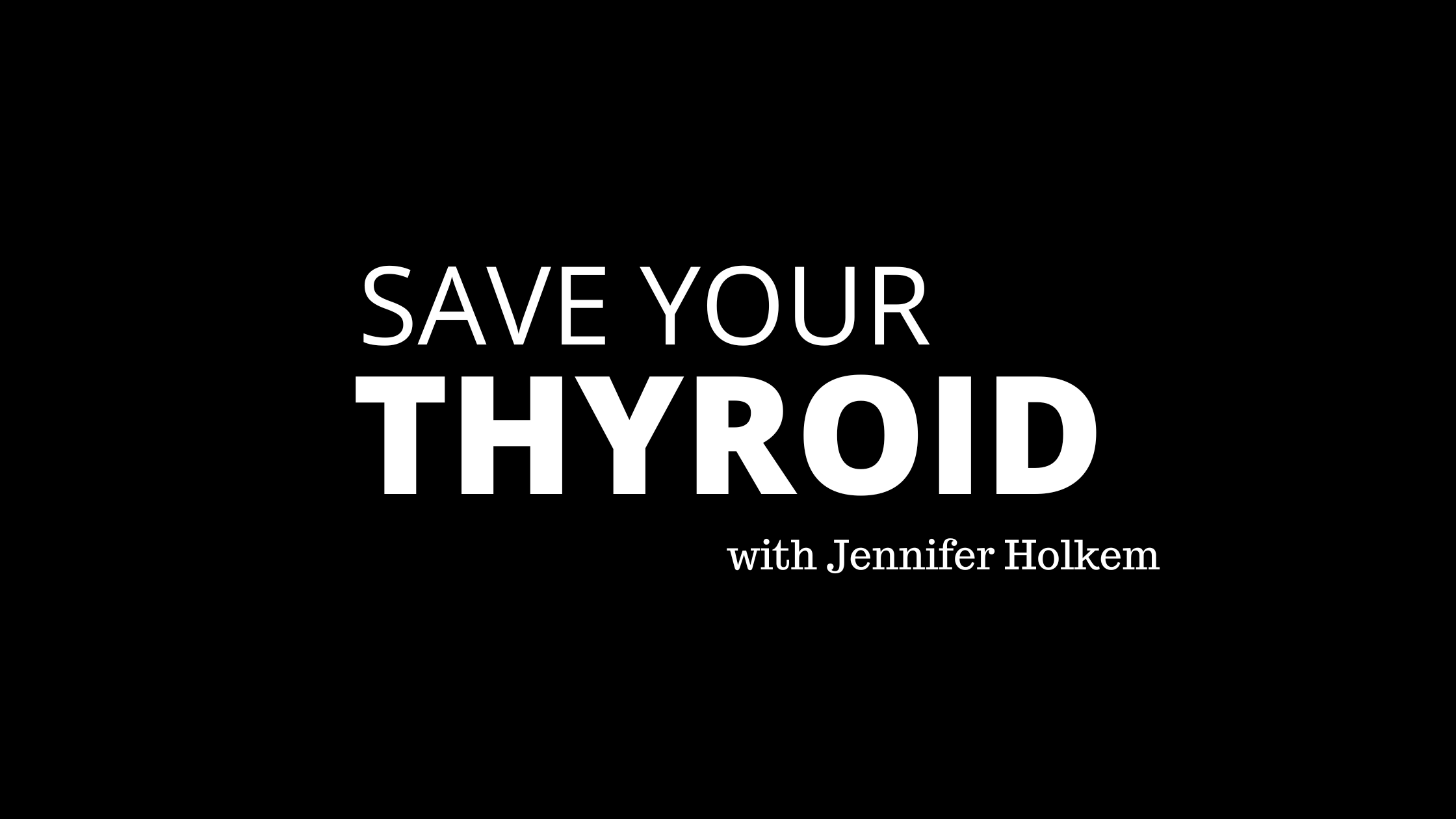
Dr. Goldenberg is Professor and Chair of the Department of Otolaryngology–Head and Neck Surgery at Penn State Health and Penn State College of Medicine. He’s a head and neck surgical oncologist who has written more than 275 journal articles, 40 book chapters, and eight books, and he leads Penn State’s hands-on thyroid RFA training course, which draws faculty and learners from around the world. He has performed thermal ablation for about six years, and he has more recently added nanosecond pulsed field ablation (nsPFA) to his practice.
He isn’t speaking from one side of the ablation-versus-surgery divide. He’s speaking from both.
Welcome back to Save Your Thyroid with Jennifer Holkem. This is the space where we bridge the gap between the standard of care and the future of medicine. My mission is to empower you with the knowledge you need to avoid unnecessary surgery and keep your thyroid intact for the long haul.
🎧 In today’s episode, we’re covering:
-
Why ablation has grown so popular, so fast, and where the evidence is strongest and where it’s still catching up
-
Why a large thyroid cancer can’t simply be ablated, and what “first, do no harm” means in practice
-
When size, location, or growth pattern points to surgery, including substernal goiters and airway compression
-
Why thermal ablation is done awake, and why that isn’t cruel
-
Multinodular goiter, including when ablation can help and when it can’t
-
Dr. Goldenberg’s decision framework, with two real-world patient examples
-
Whether a nodule can ever be “too small” or “too big” to treat
-
The questions to ask before you commit, including the one almost no patient asks
-
Why Hashimoto’s is not a reason to remove your thyroid
-
Why an ultrasound is a movie, not a picture
Whether you’ve been told you’re not a candidate for ablation, you’re wondering whether you are, or you simply want to understand how an experienced physician makes these decisions, this episode is for you.
Why Ablation Has Grown So Fast
Dr. Goldenberg doesn’t dispute the appeal. Ablation is performed in an outpatient setting under local anesthesia. It avoids a neck scar, preserves thyroid function, and lets patients get back to their lives almost immediately. When patients are offered a real choice between surgery and ablation, the large majority choose ablation, and as the data grows, so does the support for interventional thyroidology.
But he’s also clear about where the evidence is strongest.
“The evidence is strongest for symptomatic, benign, non-functional nodules, attributable to a single or a dominant nodule. That’s your sweet spot.”
For toxic or autonomously functioning nodules, ablation can help, but the results aren’t as strong as the size reduction it achieves. For papillary thyroid cancer, early data on recurrence-free survival looks promising, but follow-up is still limited. For now, cancer ablation is generally reserved for small cancers in patients who decline surgery or active surveillance.
First, Do No Harm: Why Large Thyroid Cancers Still Need Surgery
We see it in the Save Your Thyroid community regularly: someone new arrives, just learning about ablation, with a five-centimeter papillary thyroid cancer, asking whether they can have it ablated and save their thyroid.
Dr. Goldenberg has seen even more extreme versions, including patients with cancer that had spread to both sides of the neck who hoped ablation could treat it.
“It’s my job to honestly tell them what we can do and what we can’t do. The most important thing, and this is from the days of Hippocrates, is first do no harm.”
The reason comes down to what ablation is trying to accomplish. With a benign nodule, the goal is to shrink it enough to relieve symptoms or cosmetic concerns. A 60 to 80 percent volume reduction is an excellent result. With cancer, the goal is entirely different: destroy every last cell.
“If we’re ablating a cancer, the idea is to destroy, completely annihilate that entire cancer… You over ablate and then you ablate a little bit more.”
That’s possible for very small cancers of up to about one centimeter. It isn’t possible for a five-centimeter tumor.
“If I were to try and ablate a five-centimeter cancer, well, I would leave the patient with cancer, and that would be the wrong thing to do when I could cure them with surgery.”
When Size, Location, and Growth Point to Surgery
Cancer isn’t the only reason ablation may not be the right choice. Dr. Goldenberg walked through several other situations where he steers patients toward surgery or another path.
Very large nodules. A ten-centimeter nodule can be ablated, but it may take two or three sessions spaced nine months to a year apart. Some patients are willing to wait. Others would rather have half the gland removed and be done with it.
Extension into the chest. If a nodule extends down to the level of the aorta or the heart, it isn’t safe to ablate that portion.
Airway compression. A patient in respiratory distress can’t wait months for a nodule to shrink. In his words, “This patient is in mortal danger,” and the compression needs to be relieved right away.
Dangerous locations. A nodule sitting in what he calls the danger triangle, right where the recurrent laryngeal nerve runs, carries real risk with thermal ablation. “You can leave them hoarse forever.”
Rapid growth. A nodule that is growing quickly raises concern for malignancy. “That’s not the behavior of benign.”
Indeterminate or suspicious cytology. Indeterminate nodules generally aren’t ablated, and a biopsy suspicious for malignancy rules ablation out.
Practical factors. Limited neck extension from cervical spine problems, inability to tolerate the procedure, or unwillingness to commit to follow-up can all make someone a poor candidate. Dr. Goldenberg follows every ablation patient long term, because six years is still a short window, and we’re still learning.
“If you and I have this conversation six, seven, ten years from now, things may be different. But right now, we have to proceed with caution so that we don’t hurt anyone.”
Why Thermal Ablation Is Done Awake, and Why That Isn’t Cruel
This is something I hear about in my YouTube comments regularly. People who are new to ablation are sometimes horrified to learn that patients are awake during the procedure.
Dr. Goldenberg explained why. When a physician is working near the recurrent laryngeal nerve, being able to ask the patient to speak and listen for hoarseness is an important safety check. The thyroid gland itself doesn’t feel pain. Only the capsule surrounding it does, and that is numbed with local anesthetic.
His team works hard to make the experience calm, with eye shades, soft music, and aromatherapy. His patients also receive an anti-anxiety medication beforehand. Even so, having someone working at your neck for 45 minutes to an hour can be intense, and on rare occasions a patient simply can’t tolerate it. When that happens, they reassess and consider another technology, surgery, or observation.
Multinodular Goiter: A Bag of Grapes
Does a multinodular goiter rule out ablation? “Not necessarily, but perhaps.”
If a patient’s symptoms can be traced to one particular nodule that has been proven benign, that nodule can be ablated. But when the gland is full of large nodules, there’s no single target.
“It’s almost like a bag of grapes, if you think about it. Then you say, what am I gonna ablate? I can’t ablate all of them.”
In those cases, thyroidectomy remains the mainstay for a large, symptomatic multinodular goiter.
Dr. Goldenberg’s Decision Framework
When I asked how he decides between ablation and surgery, Dr. Goldenberg laid out a clear set of questions he works through with every patient:
-
Is it benign? He has to be personally convinced. If he doesn’t trust an outside biopsy, he repeats it.
-
Are the symptoms attributable to a single or dominant nodule? If not, he won’t ablate. He won’t operate either.
-
Is the nodule accessible and an appropriate size?
-
Does the patient accept the trade-off? Ablation doesn’t offer instant gratification. Surgery removes the nodule tomorrow, at the cost of a scar and an operation.
-
Is the patient willing and able to be followed?
Then he made it concrete with two patients.
The first is a 40-year-old woman with a 15 mL solid, benign, TI-RADS 3 nodule causing neck pressure or cosmetic concern, with no other nodules and normal thyroid function. “She’s perfect. She’s the perfect candidate.”
The second is a 55-year-old man with a 35 mL dominant nodule within a multinodular goiter, in a substernal location, with indeterminate cytology.
“Well, guess what? This patient needs surgery, and I personally will not do ablation on them because I don’t think it’s the right thing to do.”
Is There Such a Thing as “Too Small”?
I recently saw a post in our community from a patient who was told her nodule was too small to treat. So I asked Dr. Goldenberg directly: how small is too small?
His answer surprised me.
“There is no too small. If I can stick a needle in it and if I believe I can help the patient, I’ll do it.”
He has seen nodules of only a centimeter and a half to two centimeters cause real swallowing discomfort because of where they sat. The same principle applies at the other end. He has treated nine-centimeter nodules over three sessions in two years.
What matters isn’t a single number. It’s clinical judgment, and whether treatment can genuinely help you.
The Questions to Ask Before You Commit
Ablation is still new enough that patients are right to want confidence in their physician’s judgment. Dr. Goldenberg suggested these questions:
-
Has my nodule been biopsied, and is it benign?
-
What volume reduction can I expect, and when?
-
What are the chances I’ll need a second procedure?
-
What does follow-up look like?
-
How many of these have you done, and how long have you been doing them?
-
What are my alternatives?
And the one he says almost no one asks:
“Is my nodule causing my symptoms? No one ever asks that. No one ever, ever, ever asks that.”
Dr. Goldenberg examines the larynx of every patient before any procedure, and he often finds reflux contributing to symptoms patients attribute to their thyroid. Treating a nodule that isn’t causing your symptoms won’t make you feel better.
What a Thorough Workup Looks Like
Before ablation, Dr. Goldenberg’s patients receive:
-
Thyroid function tests (TSH, T3, T4), and in some cases thyroid antibody testing for Hashimoto’s
-
A high-quality neck ultrasound, which he reads himself
-
A benign biopsy he trusts
-
A thyroid scan for hyperthyroid patients, to confirm exactly which nodule is overactive
-
A laryngeal exam to confirm the vocal cords are working normally before treatment
“Your Thyroid Is Dying Anyway”? Not a Reason
Some patients with Hashimoto’s have been told there’s no point in saving their thyroid. They might as well have it removed, because it’s dying anyway.
Dr. Goldenberg has heard the same thing, and he doesn’t accept it.
“We’re not doing this because your thyroid is dying anyway. We’re doing this because you have a nodule, which is symptomatic, and I can help you by shrinking it… It doesn’t matter if there’s a background of Hashimoto’s.”
He applies the same conservative thinking to surgery. For many large goiters, including substernal goiters, he removes only half the gland when that’s enough to relieve symptoms, because operating on both sides doubles the risk.
“If you take out one side, you risk one nerve and two parathyroids. If you take out two sides, you risk two nerves and four parathyroids.”
He calls the “just take it out anyway” approach very old-school thyroidology. In his words, “We don’t do that anymore. It’s not the right thing to do.”
A Message for Referring Physicians
As awareness of ablation grows, Dr. Goldenberg has noticed a shift from under-referral to over-referral. Physicians who have heard about ablation sometimes send patients who aren’t appropriate candidates. He doesn’t fault them, because many have simply never seen the procedure.
His advice is to call and ask, or to send the patient in for a conversation. Plenty of patients referred for ablation turn out not to need anything at all.
“Is it bothering you? No, I didn’t even know it was there. You having problems swallowing? Nope. Okay, guess what? Let’s just watch it for a while. And they’re very happy.”
“Not everyone leaves with ablation, not everyone leaves with surgery.”
Ablation Is a Tool, Not a Philosophy
Toward the end of our conversation, I asked Dr. Goldenberg to finish a saying I always fumble. He delivered the line that sums up this entire episode:
“Just because you have a hammer doesn’t mean everything’s a nail. Ablation is a tool. It’s not a philosophy, and nor should it be.”
Ablation has expanded the treatment landscape for symptomatic benign nodules and select thyroid cancers, and new applications are being explored. But it works best for an accessible, ultrasound-visible, single or dominant nodule where it can preserve the thyroid and relieve symptoms.
And when a physician tells you it isn’t the right choice for you, it’s not because you’re being ignored.
“Most of us physicians want to do the right thing by the patients. And sometimes it’s not the right thing.”
An Ultrasound Is a Movie, Not a Picture
One of my favorite quotes from a past interview on this show is that an ultrasound is not a picture, it’s a movie. Dr. Goldenberg agrees completely.
He recently had a patient arrive with only a still image showing half of her nodule. She received a full ultrasound at his institution that same day. Ever since a resident once told him a patient had “no imaging, just an ultrasound,” no resident has graduated from his program without knowing how to perform and read one.
“Every now and again, a primary care physician will send someone for an MRI because an MRI is shiny and expensive. But guess what? Ultrasound is king when it comes to thyroid and thyroid disease.”
He often sits with patients and walks them through their own ultrasound, giving them a tour of exactly what he’s seeing.
How to Find Dr. Goldenberg
Dr. Goldenberg sees patients at Penn State Health Otolaryngology–Head and Neck Surgery in Hershey, Pennsylvania. Ask about thyroid nodule ablation.
https://www.pennstatehealth.org/services-treatments/radiofrequency-ablation
For a broader list of physicians performing nonsurgical thyroid procedures across the US and abroad, visit saveyourthyroid.org and click FIND A PHYSICIAN at the top of the page. And be sure to check out our physician map! Free, unsponsored, and updated regularly.
Watch this episode on YouTube, or download for offline viewing on YouTube Music!
[Click the thumbnail above to watch on YouTube!]
Save Your Thyroid with Jennifer Holkem is now available on all major podcast platforms!
Visit my new podcast website, SaveYourThyroidwithJen.com!
Key Takeaways from Episode 129:
1. Ablation is a tool, not a philosophy
It’s life-changing for the right patient, but the right patient is the key. Sometimes surgery or observation is the better path.
2. Ablation works best for one specific kind of nodule
The strongest evidence supports ablation for a benign, symptomatic, single or dominant nodule that can be reached safely.
3. Shrinking isn’t enough for cancer
With cancer, the goal is to destroy every cell. Large thyroid cancers still need surgery, because what’s left behind is still cancer.
4. Ask: “Is my nodule causing my symptoms?”
Swallowing and throat symptoms can come from other causes, like reflux. Make sure the nodule is truly the source before any procedure.
5. There’s no strict “too small” or “too big”
Small nodules in the wrong spot can cause real symptoms, and large nodules can be treated in stages. Clinical judgment matters more than a single number.
6. Some cases point to surgery
Extension into the chest, airway compression, rapid growth, suspicious cytology, and a gland full of large nodules all favor surgery.
7. Hashimoto’s isn’t a reason to remove your thyroid
Treatment should target the symptomatic nodule, not the background condition of your gland.
8. An ultrasound is a movie, not a picture
A real-time ultrasound reveals far more than a still image, and it’s the foundation of every good treatment decision.
For more updates like this, and to explore non-surgical thyroid nodule treatments like RFA, TAE, MWA, and nsPFA, be sure to subscribe!
AND, don’t forget to visit my website:
👉 SaveYourThyroidwithJen.com
There, you can also sign up for personalized one-on-one patient navigation, because no one should feel alone on their thyroid journey.
Please consider supporting my work. Every donation is sincerely appreciated!
Find a physician, explore treatment options, and join our patient community here:
Disclaimer: None of the statements made in this or any other blog/video by “Its me Jen again” should be considered medical advice.
The goal of this podcast and blog
I seek to provide data, resources, and expert opinions on the topic of thyroid nodules, and make it accessible to patients. When I was first looking for thermal ablation treatment, everything that I read was physician-facing material. It was very hard for me to understand. This material is meant to help patients understand what’s going on in their thyroid gland and what an important gland it is. If you can keep your thyroid intact, that’s going to help you live a longer, healthier life, and preserve your quality of life. Thanks for reading this far today! — Jen
Thyroid Artery Embolization (TAE): How It Works, Who Qualifies, and What to Expect


 Goodpods