
 Amazon Music
 Apple Podcasts
 Audible
 Castbox
 Deezer
 iHeartRadio
 PocketCasts
 RSS Feed
 Spotify
 YouTube
 Youtube Music
  Goodpods
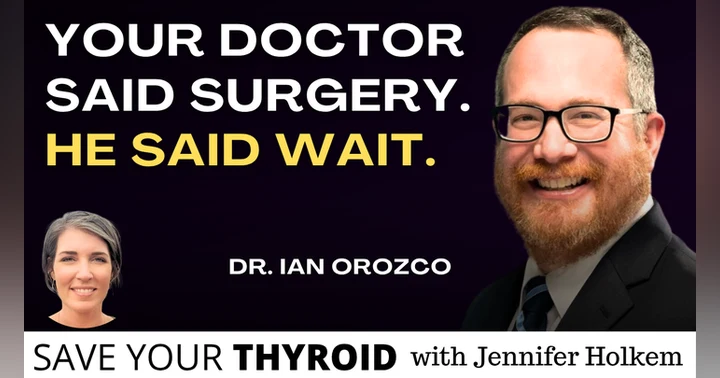
 Stop Unnecessary Surgery: Dr. Ian Orozco Launches The Thyroid Institute of Utah
For a long time, a thyroid nodule diagnosis followed a predictable path — symptoms appeared, surgery was scheduled, and the gland was removed. The question was never if you would have surgery. It was when.
That's changing. And Dr. Ian Orozco is one of the physicians leading that change.
Dr. Orozco is a board-certified interventional endocrinologist based in Provo, Utah, and one of the most experienced RFA providers in the Intermountain West. After five years performing RFA within a larger institution, he made a bold move — taking over the Thyroid Institute of Utah, the oldest thyroid-only practice in the state, and rebuilding it entirely around the modern thyroid patient.
In this episode, he joins Jennifer Holkem to discuss what that independence means for patient care, why a thyroid-only practice produces a fundamentally different experience, and why the urgency you felt at the end of your surgical consult was probably more about the practice's schedule than your actual medical situation.
We also cover the harder conversations — the 1 in 5 statistic on post-thyroidectomy patients who never feel well again, why insurance companies calling RFA investigational are factually wrong, the difference between RFA and ethanol ablation, and why volume and experience are non-negotiable when choosing a provider.
Dr. Orozco's closing advice: find someone who knows about nonsurgical techniques. Just reach out. You can't undo surgery.
Are you being told that a thyroidectomy is your only option for a growing thyroid nodule? Dr. Ian Orozco is here to change that with the launch of his new private practice, The Thyroid Institute of Utah.
In this episode of Save Your Thyroid, we are challenging the status quo of traditional thyroid care and exploring the minimally invasive revolution of Interventional Endocrinology. Join host Jennifer Holkem as she sits down with board-certified endocrinologist Dr. Ian Orozco, a leading expert in Radiofrequency Ablation (RFA) in the Intermountain West.
Together, they discuss his transition to a specialized private clinic in Provo, Utah, and how non-surgical options like RFA are helping patients shrink benign nodules, preserve their thyroid function, and avoid lifelong hormone replacement. Whether you are actively navigating a new diagnosis, seeking alternatives to the scalpel, or considering traveling out-of-state for expert care, this conversation is packed with the insights you need to make an informed, empowered decision.
In this episode, we cover:
The Thyroid Institute of Utah: Why Dr. Orozco opened a single-focus practice dedicated entirely to modern thyroid care.
Understanding RFA: How Radiofrequency Ablation works to treat symptomatic hot and cold thyroid nodules without surgery.
Navigating the Hurdles: The truth about insurance coverage, Medicare codes, and how to advocate for yourself.
The Future of Treatment: Emerging technologies, ethanol ablation for cysts, and why the "wait and see" approach is becoming a thing of the past.
Enjoyed this episode? Subscribe to Save Your Thyroid for more interviews with the world’s leading experts in thyroid-saving technology.
⏱️ Episode Chapters:
00:00 Introduction to a New Era in Thyroid Care
02:35 Dr. Ian Orozco's Journey and Philosophy
06:57 The Importance of Collaboration in Thyroid Treatment
10:35 Understanding Radiofrequency Ablation (RFA)
20:17 The Benefits of RFA Over Traditional Surgery
27:52 Expanding Treatment Options and Innovations in Thyroid Care
33:52 How to Connect with Dr. Orozco for Treatment
35:49 Empowerment in Patient Care
36:45 Navigating Insurance Challenges
39:45 The Future of Interventional Endocrinology
42:49 Emerging Technologies in Thyroid Treatment
48:24 Lightning Round: Insights and Advice
53:52 Final Thoughts on Patient Empowerment
Resources:
👉 Podcast: https://www.saveyourthyroidwithjen.com/
👉 Patient site: https://www.saveyourthyroid.org/
👉 Private FB group: https://www.facebook.com/groups/saveyourthyroidnonsurgical
👉 Patient Navigation: https://www.saveyourthyroidwithjen.com/p/patient-navigation-services/
Support the channel:
PAYPAL👉 https://www.paypal.com/paypalme/itsmejenagain
VENMO👉 https://account.venmo.com/u/itsme_jenagain
Affiliate links:
🌿 TOUPS AND CO: https://toupsandco.com/jen
🎙️ RIVERSIDE: https://www.riverside.fm/?via=itsmejenagain
🧴 VAN MAN: https://vanman.shop/?ref=itsmejenagain
💡 BON CHARGE: https://us.boncharge.com/?rfsn=7843863.50b9fa&shpxid=4137e8a5-8199-46cb-b71c-0f86d29924ff
⚠️ Disclaimer:
This podcast is for informational purposes only and is not a substitute for professional medical advice. No endorsement is given or implied for any specific product, treatment, or physician mentioned. Always consult with a qualified healthcare professional regarding your individual medical needs.
Hosted on Acast. See acast.com/privacy for more information.
Ian Orozco (00:00)
I want as few people as possible to have unnecessary thyroid surgeries.
Its Me Jen Again (00:04)
Well, I don't think there's any better way to close this
You're listening to Save Your Thyroid with Jennifer Holkem This is the podcast where we challenge the status quo of thyroid treatment and advocate for the preservation of your most vital metabolic engine. For a long time, thyroid care followed a very predictable one-way street. If you had a nodule that caused symptoms, you were often told your only real exit was a thyroidectomy. It was a trade-off. You lose the symptoms, but you also lose the gland, the hormones,
and a piece of your autonomy. For many, the question wasn't if you would have surgery, but when. But today, we're talking about a new frontier. We're moving away from the era of management
era of intervention. We're seeing a new breed of physicians, interventional endocrinologists, who are refusing to accept that surgery is the only answer. They are
technology like radio frequency ablation
to treat the problem at its source while keeping the patient whole. Joining me today to discuss this shift as someone who isn't just practicing this technology, he's building a new home for it. Dr. Ian Orozco is a board certified endocrinologist based in Provo, Utah, whose reputation for excellence in RFA has made him a beacon for patients throughout the Intermountain West. Dr. Orozco has recently taken a bold step in his career.
by moving to the Thyroid Institute of Utah, the oldest and most established thyroid-only practice in Utah. By moving into private practice, he has created a specialized environment where the focus is entirely on the modern patient, someone who's informed, proactive, and looking for alternatives to the operating room.
He's a physician entrepreneur who is quite literally redefining what it means to be a thyroid specialist in the 21st century. Dr. Orozco welcome to the show.
Ian Orozco (01:56)
Thank you for having me. It's great to be here.
Its Me Jen Again (01:57)
It is always nice to talk with you. We've known each other a few years now and this is your, ⁓ I believe your second time on the podcast. So thank you for coming back. And I'm excited to talk about this move that you've made. So, but let's start with the fact that many of the listeners who are returning viewers of this podcast may know of you from your previous work in the region.
Ian Orozco (02:06)
It is, Absolutely, thanks for having me.
Its Me Jen Again (02:23)
So why don't you share a little bit of the history, your history leading up to the transition and now the history of the Thyroid Institute of Utah and what inspired you to branch out in this way.
Ian Orozco (02:35)
So I've been doing RFA now for about five years and I've wanted to make it a specialized single focus, you know, this is what we do. And on a personal note, I don't really want to work for anybody. I've kind of been that way for a while, but it gives me the freedom to tailor the practice, everything from the initial contact to, you know, I have a thyroid problem or I have a thyroid nodule.
Its Me Jen Again (02:51)
I can understand.
Ian Orozco (03:00)
And from the point of contact, of contacting the office to be seen through the initial consultation to the day of RFA if that procedure is indicated to sort of the follow-up care that I have control of all aspects of it. And then I can hire the right people to make sure that it's the best experience possible, that we can make sure that it's the best experience possible from start to finish to.
you know, for folks who are familiar with RFA when you sort of have the surveillance imaging and care afterwards to see the results of the procedure. It just provides me the ability to be more agile, to sort of better change things and processes to better fit an individual patient and to just overall make it a better patient experience.
Its Me Jen Again (03:44)
That's great. Tell us about the practice that you've become a part of because
Ian Orozco (03:47)
Yeah, so the thyroid institute
is actually a relatively old practice, although I've taken over it now and sort of refocused it to specifically thyroid care. It was actually started over a decade ago by some ENT surgeons. And at that time, RFA, of course, was not available in the United States. It was in other countries. But even then, instances for folks who have thyroid problems where RFA, they're not a candidate for RFA.
Working very closely with surgeons as an endocrinologist in terms of our ultrasound skills set for many of us who are interventional endocrinologists and thyroid biopsies and just preparing folks for surgery who require surgery, having that very close relationship with the surgical group really makes the patient care better. You know, I carry that on today. I still work very closely with the surgeons who previously
know, owns the practice. And so when you have cases where, you know, clearly surgery is the direction that folks need to go, being able to have that communication and dialogue with them around surgery, after surgery is very, very beneficial. But as RFA has sort of gained traction in other non-surgical techniques, the need to send patients to surgery is becoming less and less and less and less.
And so you can imagine if you're a surgical group that owns a thyroid practice who is really no longer working as frequently in close concert with you, that becomes significantly less attractive for them to sort of hold on to as part of their, you know, it was really a multi-specialty group at the time. So now we're completely split off, so we're entirely different entities, but we have a very cordial, friendly working relationship. I still share some office space with them.
And so, like I said, when I have patients who require surgery, which still is required for cases, it's very easy for me to sort of transfer their care to them and then for them to come back to me for the follow-up care afterwards.
Its Me Jen Again (05:41)
I think that's incredible. That dialogue and that collaboration between specialties, I feel like is so critically important, particularly in thyroid, because like you said, we do have patients who need surgery. The reality is there are always going to be patients who need surgery. Even though the indications for non-surgical technologies are expanding more and more every day, we're seeing,
Some people are using RFA to treat ⁓ parathyroids and thyroid cancer ⁓ indications are expanding. And before we know it, be seeing all kinds of things that we couldn't have even dreamed of ⁓ five years ago, seven years ago when this became FDA cleared in the US. So I think that that collaboration between specialties is only gonna increase even as we do see surgeries decreasing and
I honestly kind of just as a side note, I think it'll be really cool when somebody takes on the task of actually finding out how many less surgeries have been done since the inception of non-surgical, particularly RFA in the US treatment for thyroid nodules. I would just love to see that data because it would be really interesting to see the downward trend or how downward of a trend really was it. ⁓
So if you ever find out about that, if you find out someone's doing that research, let me know, because I've been just waiting for a while now to see someone do that.
Ian Orozco (07:07)
Yeah,
you know, that's a, that's a great question and we don't have a lot of data on that. And I think the challenge on that is, that it's, I still think infancy is probably not quite the right word, but certainly not adolescent. mean, it's so, so new for it. And, you know, I have, I was at a conference last year and I, you know, I talked to a guy, he was the only one in the entire state of Arkansas that does RFA. Right. And so it's just still widely not available.
Its Me Jen Again (07:19)
Mm-hmm.
Right?
Right.
Ian Orozco (07:35)
⁓
And I'm actually still shocked sometimes when it's not indicated. You know, I had a referral just a month or so ago and, you know, a very educated patient who was familiar with RFA and, you know, she was in Boston, right, for school and seen at one of the big institutions there who I won't name and, you know, autonomously functioning thyroid nodule, benign biopsy, you know.
reasonably controlled on medication. We discussed in a previous podcast in terms of size and the perfect location, great size. Everything says, this is an RFA case. No one even brought it up. No interest in doing it. She was basically told radiation or surgery. And then she moved out here to Utah and came and see me. And I'm literally reading through her chart going.
Its Me Jen Again (08:07)
way.
Yeah.
Ian Orozco (08:22)
please tell me she hasn't had surgery, please tell me she hasn't had surgery. And so even in, know, mean, Boston is no slouch, right? I mean, you've got excellent medical centers there, you have excellent endocrinologists there, you have excellent endocrine surgeons there, and just not something that, you know, crossed the radar for that particular individual. So, you know, there are states where it's just not available. And then I think that there are states where, you know, there's places where it's available and it's just still supremely underutilized.
Its Me Jen Again (08:30)
All
Ian Orozco (08:50)
You know, now her case was, I, know, reading between the lines, I'm not sure. She didn't have the nicest looking nodule. So, you know, traditionally we do one biopsy before doing RFA on a hot nodule, on an autonomously functioning nodule. I did do a second on hers, just kind of reading between the lines, you know, was there some hesitancy there for that reason? And just to sort of do it under my own care to make sure that she has the green light to do it. But at the same time, just the fact that it's, you know, 2026 and
Its Me Jen Again (09:13)
Absolutely.
Ian Orozco (09:18)
you know, the topic wasn't even really broached. And you're just kind of like, really? ⁓ And so that happens and that can happen, you know, anywhere. you know, part of my, I have a little sort of a joke on that one and not to offend my surgical colleagues that do RFA, but, you know, I always kind of say, if you want to have thyroid surgery, go talk to a thyroid surgeon. And, you know, and I think in her instance, it may have been who was, you know,
Its Me Jen Again (09:21)
Yeah. Yeah.
Absolutely.
Mm-hmm.
Ian Orozco (09:45)
managing her care who just did not do it. And I've had plenty and plenty of consults too where I'm sort of the second opinion. They told me this nodule is too big or it can't be done because of X, Y or Z. And most of the time that is not accurate. Now, whether or not it'll require more than one session or whether or not there's a specific technical issue with that nodule, that's a different question. And then that always also sort of comes down to what is the patient's motivation. If you have one of those
big large nodules that's going below the clavicle. Everyone who does this knows if you want to really treat it all it's going to be more than one session. But that's patient dependent too, right? Because if they're like, I don't really care about the cosmetics, I just have trouble swallowing. Well, sometimes that one session does enough, right? You're able to treat that part that you have access to. When it shrinks, the rest of the nodule moves up.
Its Me Jen Again (10:29)
Right.
Ian Orozco (10:35)
sure they got a lump in their throat, but they're like, I can swallow, I'm happy. And we just keep an eye on the stuff that's left behind. And so a lot of times those patients are just told, it's too big. You can't do RFA because it's too big. And that's just not really an accurate statement. And so if we circle back to your question of how many surgeries we're avoiding, that is an interesting statistic. But to look into, I just think if you looked at data from 2018 to 2022, you're going to get a dramatically different.
Its Me Jen Again (10:39)
Right.
Thank
Ian Orozco (11:04)
different number in terms of how many surgeries are being avoided. I remember when I started doing this, you'd have three or four times the number of people who were insured just was like, we're not covering that compared to the number of cases that you did. And that's becoming less and less and less common now. We still have disagreements with some insurance companies. And I know you've had some previous podcasts about the reimbursement for it, which I think that
particularly for the Medicare population is gonna be the biggest prohibitor in this gaining more traction in the United States. But I think if somebody has a nodule, especially if it's not cancer, I really think it's important that they speak with someone, surgeon, interventional radiologist, endocrinologist, somebody who is at least minimally familiar with the procedure, if not actively doing it themselves.
Its Me Jen Again (11:33)
Yeah.
Absolutely, that is the primary piece of advice we give to patients who want to an actual physician's opinion on this. Like, am I actually a candidate for this procedure? How can your doctor tell you yes or no, you are not a candidate if they don't actually know about it and do it? They're most likely not gonna give you an accurate estimation of
true candidacy. And so we always tell patients, to someone who actually does this procedure because that's the only way you're truly going to know. And right now, even seven years in to these procedures being available here in the US, the non-surgical options, we still have a huge amount of unawareness in the medical community so that a patient may not even be told that this is an option if they don't know on their own.
And we have this really interesting population of patients who are so much more motivated than previous generations were to take it upon themselves to educate themselves on their options, to join communities like ours, like Save Your Thyroid, and to go into the doctor's office already knowing about things to a certain level before they actually talk with the doctor.
And I think that's critically important for people to realize that we're still in that stage right now where you may go to the doctor and ask about this and they may not know as much about it as you do. And so the patients in this area are having to take it upon themselves to advocate for themselves and to to find the physician that can help them actually really know truly, are they a candidate or are they not a candidate for this?
these procedures. So I think that's great you mentioned that. Before we kind of get more into the details, just kind of talking about your philosophy of care at your practice, tell us what is your primary mission in your practice as an endocrinologist?
Ian Orozco (13:54)
I mean excellence in everything. I mentioned from talking to my staff about granular stuff, how they answer the phone, to how we do scheduling. We have a fast track sort of way we do things for people who have thyroid nodules or are interested in RFA. I actually have a standing order for that for my patients who are pregnant who have thyroid problems.
I've joked with my staff that if someone calls you from the Salt Lake City airport, tells you they're pregnant and have a thyroid problem, just put them on my schedule and we'll figure out their records and everything else after the fact. That's part of the reason to do the practice on my own and to strike out on my own because I can do things like that. don't have an administrator or someone else that has to go through this way and referrals have to go here and we have to have this information and we have to do that.
So it provides me a lot more flexibility. Same thing with the procedure itself. It's just excellence in everything we do. I'll have times where we're doing the RFA procedure and there's sort of a little wedge there and I can tell it's left behind and I just tell the patient, if you're doing fine and you're doing okay and everything's going good with the procedure, know that I'm basically going for perfection with this particular case.
And so I have very, very, very few nodules that are not responding to RFA. I think a little later we're going to talk about some upcoming technologies and other things. And I have some imaging modalities and things to talk about that to help do that. I have the freedom to do those things. And so it's very linked to your previous statement about
the patients being more educated, knowing more about the procedure than many of the physicians in the community or in their area, is that to really save people's thyroid and keep people from having unnecessary surgeries, I really think it's gonna become more common for individuals to strike out and do this. You always have the universities that do it.
You know, in my home state, North Carolina, the handful of places that you can have it done are basically at the universities. But, you know, the universities are big, often sometimes government, you know, funded slash run institutions. And there's just a certain inherent bureaucracy and inertia, you know, in doing that. And so I think really with that sort of new modern patient that's informed and really wants to know what's going on and what's the best for them.
I think that you have to have a sort of different kind of practice to do that. You know, in the rare instances that I've had patients who I either just didn't feel RFA was best for them or, would require multiple sessions for a good outcome, you know, have these, it's very frequent that these patients are very knowledgeable of it. And so there's a mutual understanding of, you know, should we do A or B or C? That's more common in the autonomously functioning nodular arena that we talked about before.
And so I just think of practices have to be more nimble. And then when you sort of focus on it, right, I'm doing thyroid nodule and thyroid disease and thyroid ultrasounds and thyroid biopsies and RFA and, you know, I'm starting to get back into ethanol ablation that that's becoming easier to do now. That's literally all I do every day. And so, you know, you're going to get the cutting edge. This is what I think, you know, and this is what I think is best for this particular patient.
Its Me Jen Again (17:09)
That's excellent, know, not to just be parroting what you said about excellence, but having someone who is doing this arena daily is really critically important. And I tell patients all the time, especially if you're going to have surgery, you know, find someone who's doing these all the time. You want that excellence in your surgical care, but it applies to this as well. It's absolutely important.
Ian Orozco (17:35)
Absolutely.
Its Me Jen Again (17:37)
that you have someone who really, really knows what they're talking about and what they're doing. So that's incredible. that's so unique about this area of medicine. You you're talking about referrals and the path for the patient. It's not traditionally been in the past where the patient strikes out on their own.
to find what they're looking for. Generally speaking, you go to the primary care, they refer you to the endocrinologist, they refer you to the surgeon, and then you end up with the surgery. And here, we're in a situation now where the patient kind of has to sometimes depart from that traditional path to find what they're actually looking for, and in this case, which is RFA for treating a thyroid nodule. So...
That's why I'm so passionate about helping people find the doctors that are doing this because you are trying to be an excellent physician helping these patients and we have these patients who are looking for that. So my goal is to pull the two of you together and help you find one another. And I love what I do.
Ian Orozco (18:41)
Well,
and you're very good at it, and those of us who do this very much appreciate it. And I think that is one of the reasons, too, to sort of be independent. Like I said, I can tell my staff, right? If someone calls and says, have a nodule, I want RFA they're just going to tell them to send their information, and I'll take a look at it. And so this requiring referral is becoming somewhat antiquated in that respect.
Its Me Jen Again (18:44)
thank you.
Yeah.
Ian Orozco (19:06)
And I still see patients, you I had one a couple of weeks ago who had a hemithiroidectomy for an indeterminate nodule and she didn't even have molecular testing before they did the surgery. And it's right. mean, I kind of make that face, I mean, you don't in front of the patients, but I kind of make that face as well. I'm thinking to myself, what year is it? And so you still see it. And I'm not, you know, I have a history of practicing in rural locations. In order to do this, that's not really a possibility.
Its Me Jen Again (19:23)
Yeah.
Ian Orozco (19:33)
very easily anyway, but to still see that it's sort of similar to my patient from Boston that you just really, you you kind of ask the patient and keep your professional sort of poker face. So they do molecular testing before you had some, no, they just told me that I need to go straight to surgery. And so it still happens in 2026.
Its Me Jen Again (19:50)
Yeah. Well, for the viewers watching this podcast, I am working on some podcasts on molecular testing. So stay tuned for that. ⁓ That is another area that we need a lot more education on for patients. So I'm glad you mentioned that. Well, we've talked about RFA kind of just like that you're doing it and that patients want it and that we can treat hot nodules with it. Can you for the new viewers who may not know what in the world we're talking about.
Ian Orozco (19:57)
Okay. All right. Excellent.
Its Me Jen Again (20:17)
Kind of just give us a brief overview summary of why someone would even want to have RFA. What is it for?
Ian Orozco (20:24)
Yeah, so RFA, radio frequency ablation, is one of the non-surgical techniques. It's one of the thermal ablation techniques for thyroid nodules. It has multiple applications, most commonly for benign nodules, either nodules that are making thyroid hormone, which we've referred to a few times as hot nodules, or nodules that are not making thyroid hormone, which is probably the most common application. It also has been used in cases for parathyroid disease.
thyroid cancer, lymph nodes in thyroid cancer. I'm actually published in one of the first case series of enlarged malignant lymph nodes for thyroid cancer. And so it's not just for thyroid nodules, but the main goal or the main reason for doing it is what you're trying to do is protect the normal healthy thyroid tissue that's not causing any issues. So if it's a nodule that you don't like how it looks cosmetically or if it's a nodule that's
problem swallowing or if it's a nodule that's making your thyroid overactive, the normal surrounding thyroid tissue is an innocent bystander. And the primary issue with surgery is the extreme exception that you can't just remove the nodule. So it has to do with the vascularity of the gland. And so generally speaking, in most instances, if you're going to have surgery for thyroid nodule, they have to remove at least half of the gland. And so you're removing a lot of
healthy thyroid tissue, you're removing a lot of tissue that's functioning normally. And if you take a patient, depending on their age and what their thyroid levels look like before surgery, anywhere from 20 to 30 to sometimes higher than that percentage of patients who have a non-urgent surgery for a not cancer, those patients end up on thyroid hormone for the rest of their life. And the...
The real concerning part on that is a good one in five people who have their thyroid gland removed and end up on thyroid hormone don't feel well afterwards. And I'm sure your viewers know, you either themselves or a friend or a family member who are kicking themselves. Why did I have surgery? I don't have cancer. Now I have to take this medicine for the rest of my life. I don't feel good. My doctor tells me my levels are normal. And it's a known thing in the medical literature.
Its Me Jen Again (22:17)
And that's it.
Ian Orozco (22:34)
And so if you can have a treatment that fixes the specific problem without doing anything or damaging the normal surrounding thyroid tissue, why wouldn't you basically, assuming that it's, you know, that you're a candidate for it and it's safe for you to have it done? You know, there are other benefits. It's cheaper. That is a little bit of a sticky situation, as we've talked about before with reimbursement, but it is cheaper. It doesn't require hospitalization. You know, you don't have
general anesthesia. Generally speaking, I do my procedure really now in 2026 with local. I haven't had a case that I've done with conscious sedation in a while. ⁓ It can be done under conscious sedation. Many practitioners who do them do them under conscious sedation. You know, there's no scar and I think that that is, you know, I do not treat that as a vain thing.
Its Me Jen Again (23:10)
Hmm.
Ian Orozco (23:22)
You know, if you look like you have this sort of serial killer slasher scar on your neck, that is not necessarily a nice thing to have. You know, now a good surgeon can hide it and make it not look so bad, but not everyone heals great from scars and it's still there. You know, in my years of doing this, I've had zero vocal cord nerve injuries and I haven't had any major complications at all.
With a hemothyroidectomy, know, half the gland in the hands of a good surgeon, the rates of complication are very low. But if you talk to many of them, not necessarily only doing it for five years, you know, their complication rate is not zero. And so arguably a lower, you know, complication rate, my surgical colleagues would probably argue with me about that. But definitely cheaper, no scar, no hospitalization.
And patients are generally, I think, very impressed with how minimal the recovery is. Usually when the local anesthesia wears off around the site is the most common time that people notice some discomfort. And there's always some pressure and you feel like there's a lump, but it is generally speaking not a painful procedure, so much so that I typically give my folks a couple of Valiums I know some of my colleagues don't give anything. I have to admit, I wouldn't do that if it was me.
So I don't usually suggest that. I have had a few patients who did not want to take anything just because they don't like how they feel with medications or have had bad reactions to them. But you're definitely more leaning on the side of doing nothing as opposed to general anesthesia.
Its Me Jen Again (24:49)
Yeah, just something to kind of help you relax while you're sitting there for the time that they're doing the procedure is really nice. I think that the vast majority of patients appreciate that. And I think the doctors do too, just so that it's a more calm and relaxed situation for them. And of course, you're not doing these in a hospital, right? You're doing them right in the clinic.
Ian Orozco (25:08)
Now,
yep, so they're all done in the office. So it is an outpatient procedure and it does not require an outpatient surgical center. I basically just set up my largest room in my office for doing the procedure. And so yeah, I'm glad you brought up that point because that is an excellent.
Its Me Jen Again (25:26)
Well, and it's just so nice when you're the patient going to have this done. I had two RFAs for the people who are not familiar with my history. I have a whole playlist on my RFA experience. ⁓ Started back in 2019. I had a second procedure in 2020. I had those done in a hospital and I had a fantastic experience, but it was a very overwhelming, anxiety provoking.
scenario to kind of walk into that hospital, navigate the hospital, you know, go through all of the, you know, it's in an OR, you know, scenario where you gown up, everything's very, very much like surgery, except for that you don't have to stay overnight and you're not put to sleep. I've observed probably close to 20 procedures now in clinics across the country. And the procedures done in the clinics are just so much more calm.
the patients don't seem as, you know, anxious about it. it's just, it's not, it's kind of a step up from going into the clinic for your biopsy really. Because you're, you're going in, you're laying in the chair. It's just a little bit more than that, you know? So, ⁓ so I think it's fantastic that you can do this in a clinic.
Ian Orozco (26:36)
Yeah, I actually sometimes joke when patients kind of want an idea of what it's like. tell them it's a little bit like what your thyroid biopsy was like if you combine that with my mom's sewing machine, right? Because you're literally just using the electrode to see if you're using the transducer or the ultrasound to see where the electrode is. And then I literally have a foot pedal like my mom's old sewing machine that you do. And you know, I think another strength of being a, you know, a singularly focused practice in a multi-specialty group, you know, outside of
Its Me Jen Again (26:54)
Mm-hmm.
Okay.
Ian Orozco (27:04)
of folks who come and see me out of state, you know, they've known my front desk person, they know my MA, they know my staff, they saw me when they had their initial evaluation, they saw me when they had their biopsy, they saw the same people when, you know, we did, you know, discuss the procedure and sort of did our RFA planning. And so, you know, oftentimes by the time you're ready to do that, I mean, practically know everyone by first name that works in the office. And so that is a very, very different experience.
⁓ I have not done any cases in the hospital. That has not been a thing for some time in our area, has not been on my radar. But that would be a very, very, I don't even like going to the hospital period, even when I'm not a patient. And so yeah, it's a much, much, much better experience, I think, when it can be done.
Its Me Jen Again (27:45)
Sorry.
Well, we've talked about RFA now, but you do all things thyroid. We kind of alluded to that in the beginning. So tell us about all of the other things that you're doing in your clinic for thyroid patients as far as diagnostic treatments. What are you excited about?
Ian Orozco (28:08)
Yeah, so RFA is a large part of the practice, obviously. I did mention I'm getting back into ethanol ablation. And so for your viewers who are not familiar with that, RFA is highly effective for solid nodules. When you have very large cysts, the major difference between a cyst and a solid nodule is the cyst is a fluid filled. I really sort of think of them like a water balloon. RFA is not effective in those situations.
And in those instances when you drain them, if you just drain the cystic fluid, the wall of cells that are making the fluid is not, nothing happens to those. And so the recurrence rate of a cyst is in the order of 90 to 95%. And so if you drain a little bit of fluid out of it and then inject it with medical grade ethanol, it will cause the cyst to shrivel down because it kills the cells that are making the liquid.
That used to be difficult to do because it was hard to secure the ethanol for the procedure. As compounding pharmacies have expanded over the, around the country, I found some pharmacies that can give me some medical grade ethanol at a reasonable price. So getting it commercially otherwise is very cost prohibitive. Obviously, due to own ultrasounds and biopsies, you you have an upcoming podcast with respect to molecular testing. That is what we do.
I'm actually one of the few endocrinologists that I hold a materials license for giving radioactive iodine. So that's going to be a heavy lift, but I'm looking forward to probably in the next year, more likely two to have my own hot lab. And when I have that, basically anything that does not involve surgery, I'm going to be able to do. And then I've got great surgeons I know down the hall if you do need surgery.
Its Me Jen Again (29:37)
Mm-hmm.
Ian Orozco (29:48)
You know, there's some emerging imaging technologies that I'm looking into. There's some 3D ultrasound imaging that can be done that sort of gives you a better view of how the nodule sits within the thyroid or within the neck. You know, there's been several papers over the last several years that have shown elastography. So elastography is an ultrasound technique where it tells you how stiff the nodule is.
you know, the holy grail or the way to do it would be for me to see someone and have a nodule and go, you know, that looks like it's a pretty good candidate nodule, but I'm a little more concerned that this may be one that does not, you know, respond well to RFA. And there's good emerging data that shows the stiffer a nodule is, the more resistant it is to the treatment. You know, I think that will be important for treatment planning. I would plan for a longer session. I would plan for a higher amount of energy being delivered.
as opposed to if you have a very soft nodule on the elastography, those tend to respond very well to the thermal procedures. We've always sort of known that, but in a way to sort of quantify that, which elastography would let you do. And there's several studies now that have shown that that can be helpful. So I plan on implementing that, you know, the latest and greatest ultrasound technologies with respect to planning and
Its Me Jen Again (30:49)
Mm-hmm.
Ian Orozco (31:05)
That and the NUKEmed are really the next big steps for me. the sticking to thyroid focused, parathyroid focused, know, happy to have conversations with people about parathyroid and RFA, as well as thyroid cancer and RFA. Not everyone who does this procedure will take on those kinds of cases. But just basically to stay at the cutting edge, I am getting some, looking to get some experience with the nanopulse wave.
Its Me Jen Again (31:23)
Mm-hmm.
Ian Orozco (31:28)
⁓ I'm not sure where that's going to go. The electrode for it is very expensive. ⁓ And there's some rumbling about folks doing it more in surgery centers, which I think is going to make it less accessible. And I think that's one of the things with what happened with the reimbursement for RFA is really going to hurt that technique while it's a different code to the government. And it is a different
Its Me Jen Again (31:28)
Okay.
Mm-hmm.
Mm-hmm.
Ian Orozco (31:53)
procedure. is a different technique. It is a non-thermal, meaning it's not heat related in terms of its super short pulses of electricity that disrupt the cell structure and then causes them to die. The idea behind the technology is that it'll be safer to keep you from damaging nearby structures. I think most of us who've been doing RFA for a long time are generally not concerned with that.
Its Me Jen Again (31:57)
Right.
Mm-hmm.
Ian Orozco (32:14)
And it looks like the speed of the improvement of the the shrinkage of the nodules is faster But at the end of the day, I'm not sure how important that is But I think there's some concern that that would be cost prohibitive, but I am starting to dabble in that a little bit It's basically the same technique and same procedures if you could do RFA you can do the to do the nanopulse You know probably a little more in detail than necessary for the podcast But
Its Me Jen Again (32:35)
Mm-hmm.
Ian Orozco (32:40)
primarily the goal is right now is to just have the best thyroid and parathyroid care in this part of the country, if not the whole country.
Its Me Jen Again (32:47)
Awesome and for any viewers who are interested in learning more about dr. Orozco's experience with the nuclear medicine stuff treating hot nodules with radioactive iodine We actually did an extended conversation on that topic previously I'll link that in the in the description below very interesting I learned a lot in that conversation that I did not know about radioactive iodine. So very interesting podcast episode
Ian Orozco (33:14)
Yeah, it is a topic that's not discussed as much. I think the large benign nodules and the thyroid cancer get a lot of the discussion with respect to non-surgical techniques. it is, while not as common, is another condition that is an important topic that you don't necessarily need to have surgery.
Its Me Jen Again (33:17)
Yeah.
Definitely. you mentioned that you have some patients that are coming in from outside of the area and that you're already training your staff how to address these out of town patients. So for anyone who's watching this, who's thinking, I want to go see this doctor, how would they get that type of appointment set up to come see you?
Ian Orozco (33:52)
Yeah, so the easiest way would be to just email and it can literally just be an opening email of, know, I have a thyroid nodule, I'm interested in RFA is to referrals at thyroidutah.com. That is really the easiest way to do it. That emails checked on a regular basis and my staff will just reach out to you and, you know, sort of find out where you are in that journey. Have you had a biopsy? You know, what were the results of that biopsy?
And then sort of depending on that, receiving that preliminary information, I will review all of it. In some states, doing a telehealth consult can be a challenge, unfortunately. I can get on my soapbox about that, along with reimbursement for RFA. This is not the era of the Pony Express. I mentioned that RFA is not available in some states. And so this whole concept that I can't do a consult in another state without a medical license is ridiculous.
Its Me Jen Again (34:36)
Right?
Ian Orozco (34:45)
You know, you can work around that. just typically in that case call the patients and have a conversation with them about what I think about their case is. If it's one that, you know, I feel requires a second biopsy for them to have that arranged locally, that sometimes can be more of a challenge than I wish. And then, you know, one of the things I have with the freedom of having my own practice is that I can have folks come in from out of state, you know, meet me on a Friday, go over all their stuff, talk about the procedure.
You know, this is obviously after some vetting that they're a candidate for the procedure. And then I run my own thing. So if, you know, we want to do your case on a Saturday, I can do your case on a Saturday. And then, you know, you're here for the weekend and then you fly back to wherever, you know, on Monday. And so it, again, the small practice provides a lot of flexibility with respect to that. And I think that goes to your, you know, our earlier discussion about, you know, the 2026 patient who
Its Me Jen Again (35:16)
Mm-hmm.
Ian Orozco (35:40)
doesn't want to either can't or doesn't want to go through their primary care doctor, doesn't want to go to an institution for referrals required. It's as easy as sending an email to referrals at thyroidutah.com.
Its Me Jen Again (35:50)
going through.
It's kind of empowering when you really think about it. You know, I could call you up and say, Dr. O, I want to see you about this nodule. And that's what starts at all. It's not necessary to go through the primary care referral pattern anymore. But insurance can sometimes be a hurdle in that regard, unfortunately. And so let's talk about insurance for for a moment. Talk about. ⁓ my gosh.
Ian Orozco (36:14)
My favorite topic.
Its Me Jen Again (36:18)
It is my least favorite topic! Right?
Ian Orozco (36:19)
Yeah, that was sarcasm and your viewers from Ohio will know exactly what I'm talking about.
Its Me Jen Again (36:27)
I absolutely, if you want to get me on my soapbox, we talk about insurance problems, but we're not going to talk about that right now. We're going to talk about what insurances are you accepting major plans and what's the best way for patients to kind of get through that whole scenario of dealing with insurance regarding to the RFA specifically.
Ian Orozco (36:45)
So, yeah,
so I do take major insurances, especially here out west. Blue Cross, Blue Shield, even though it varies by state, generally speaking is totally agreeable. Exceptions to that rule for NUKEmedicine and then RFA tend to be New York and New Jersey. We do have an integrated coordinator and process person who helps me with getting it with respect to other people's insurance companies.
Its Me Jen Again (36:48)
Mm-hmm.
Right.
Ian Orozco (37:11)
You know, it's much better now, as you know, than it was years ago. And, you know, it's still sometimes I joke, I feel like it's talking to the IRS. You know, I had one insurance here in Utah, you know, two of the cases sailed right through, you know, one of them, same insurance. Oh, that's experimental. And yeah, and then the other one, same insurance. Yeah, the other one, same insurance and says, oh, we don't cover that. And I'm like, like, here, let me show you the case that you did cover, you know, last month.
Its Me Jen Again (37:14)
Right, right.
Mm-hmm.
yeah, you it all the time.
Ian Orozco (37:37)
And so, know, of course I have a form letter appeal, you know, for that sort of thing. And so we, you know, we help patients with that, you know, every step of the way. You know, I do also of course offer it on a cash pay basis, which we haven't had to do that very frequently anymore. And some of it is, right.
Its Me Jen Again (37:53)
But a lot of people don't know that.
I still try to make patients aware of that point is that it's not required that your insurance cover it. It can be just your cash pay.
Ian Orozco (38:07)
Yes, it absolutely can. And it's reasonably affordable to do that. mean, the equipment for doing it is not inexpensive and the staff training and of course my time to do it. But absolutely, ⁓ I still have cases that I do that are cash pay. I would say it is more frequently when it's out of staters admittedly. I think Utah is very...
Its Me Jen Again (38:13)
Mm-hmm.
Mm-hmm.
Ian Orozco (38:31)
forward thinking with respect to that. That's one of the reasons why I started doing it here in the first place, because it was one of easier places to do it with insurance. But yes, it is most certainly an option to do that. And I would think that most folks who do that, especially, I'm gonna harp on the small specialty single focus group, we can help you with that.
Its Me Jen Again (38:36)
Yeah.
Ian Orozco (38:51)
Now, if you're going to talk to the big university with all the red tape, that may be a different question or a different story. But I think it can be accessible for everyone if it's something that they want to do and if they're a candidate for the procedure.
Its Me Jen Again (39:05)
And if you are watching this and you have been told by your insurance company that RFA is considered investigational, that is a lie. It is not investigational. The procedure is cleared by the FDA and CMS created a code for billing insurances and Medicare. January 1st of 2025, it went into effect. So that is a lie.
Ian Orozco (39:15)
That was a lie. That was a
Yep,
that is a lie. Yep, absolutely. Yes, we certainly appreciate it when the patients are allies on our side, when the insurance company's getting it from both sides. So, yeah.
Its Me Jen Again (39:28)
So, and you can point that out confidently to whoever you're discussing that with on the phone with your insurance company, just to make it perfectly clear.
Yeah.
We've got to get them to stop saying that because it's just not true. So well on a personal note, what are you most looking forward to in this next phase of your career? Because this is kind of a new frontier for you.
Ian Orozco (39:58)
Yeah, I mean, I'm kind of living the dream right now. I mean,
as far back as training, my office manager told me that I was probably going to have to have my own practice because I like things done a certain way. Right now, ⁓ I'm just living in the dream. mean, we've separated now, know, formally separated this practice from the larger multi-specialty arm just this January 1st. So, you know, I'm two and a half months into this. I couldn't be happier.
Its Me Jen Again (40:09)
I'm
Ian Orozco (40:24)
having the freedom to make the decisions that I want to make both from an entrepreneurial slash business perspective as much as just feeling very free to provide the best possible care for patients. really becomes, if I could just make it was just me and the patient without the insurance company involved, it would be Nirvana. ⁓ But it is now my practice, my operating procedure is my...
Its Me Jen Again (40:41)
Sorry. Yeah.
Ian Orozco (40:48)
way of doing things to really be able to provide the best experience for the patient. And so it's just the two of us and then unfortunately the insurance company. You know, I'm looking forward to the ability to grow. You know, right now the primary location is in Provo. And so that's a good, there is a little airport in Provo. So I do remind my out of state patients from time to time that you can fly into Provo. It is a little regional airport and will require a connector, but it is actually sometimes cheaper.
But that puts me about an hour south of Salt Lake City. I have a satellite office that I'm in right now, which is in Lehi which is about halfway between Provo and Salt Lake City. Salt Lake City would be a bit of a commute for me. I don't know that I will go over that far north, but there's this area of Utah is expanding dramatically. And so I probably will have a second satellite location at some point in time. So I'm looking forward to growing that, you know, as part of my...
part of my offering and part of my practice.
Its Me Jen Again (41:41)
Excellent. I think that anyone who wants to travel somewhere might be interested in Provo because isn't that like a primary destination for skiing and hiking and yeah.
Ian Orozco (41:51)
yes, absolutely. So BYU, there are universities there. So if you want,
you know, top notch college football and college sports, that's the place to be. The Sundance Film Festival, not far down the road, although that is moving to Colorado shortly. ⁓ And then, yeah, we have world-class skiing here, Olympics coming in 2034. It is, you know, where this is not a slouch place to come visit me to.
Its Me Jen Again (42:04)
Hmm.
Mm-hmm.
Ian Orozco (42:14)
To do that, I kind of point that out for my folks if we're talking about a weekend procedure. Because after your procedure, know, other than I don't want you to drive for about 24 hours, you can pretty much do whatever you want.
Its Me Jen Again (42:20)
Mm-hmm.
Isn't that wonderful? I see patients all the time in our community say, well, and I was hungry, so we went out to dinner. We went sightseeing and we planned a little weekend trip around it. With that in mind, we're thinking about intervening in a minimal way to help patients. Where do you see this field of interventional endocrinology going in the next five years?
I think it's kind of exploding.
Ian Orozco (42:51)
It is exploding. think
the big one will be as the insurance company to get used to the procedure ⁓ and as we have more practitioners who are doing it, it becomes more widespread that we're going to see a lot, lot less thyroid surgeries. You know, I do think once the insurance companies understand that the cost savings involved, you know, I sometimes joke with my patients. They're not a number to me, but they are to their insurance company.
Its Me Jen Again (42:57)
Yeah. Yeah.
Ian Orozco (43:16)
that, you know, I had a similar thing with molecular testing, which will probably be touched on in one of your upcoming podcasts, that, you know, I actually ran the numbers with someone from UnitedHealthcare like 15 years ago and explained to them the scenarios where they would actually be paying less money for the same number of patients if they just paid for molecular testing. And I think RFA is the same. mean, surgery is going to cost you four times as much as having RFA. And then
And then if you get in the realm of normal disrupted thyroid tissue and then you're on thyroid hormone and you have lifelong visits with a doctor because you're on thyroid medicine. mean the potential for cost savings is insanely high. And it's one of those ones where you really have to wonder what is the insurance company. Like I don't get it, right? Because I understand that you may not care what's best for the patient while I do, but at the same time I'm going to save you a buck in the process as well.
Its Me Jen Again (44:05)
I
Ian Orozco (44:11)
And so I think it's just gonna explode. I'm excited to see sort of the, you know, more data on the additional applications. I think most of us hesitate on some of the parathyroid cases based on the location, just cause you know that nerve that goes to the voice box is right there and you're just like, eh, I'm not so sure about that one. As opposed to other ones you look at and go, yeah, that one, can take care of that one. So I think more data on that. You know, I think the cancer data, particularly the...
I think the data for, you know, lymph node metasteses is super encouraging. You know, that we have good data, way less invasive. Surgeons don't like to do a second surgery in the neck when there's recurrent thyroid cancer. And so, you know, and there's a reason why they don't want to do that in terms of complications. And so I think that's an avenue that will become greatly expanded in the future. And then similarly also with the thyroid cancer, I think that
Its Me Jen Again (44:50)
Right.
Ian Orozco (45:03)
we're starting to sort of expand a little bit the staging and degree of size of thyroid cancer that we're, as we get more data that we're willing to consider RFA as a procedure. You know, there are the new technology coming out. You know, there's, won't be necessarily in my realm, but it's certainly on the radar. You know, there's ⁓ a place in California, there's a university in California that's escaping me at the moment, place.
Its Me Jen Again (45:13)
Mm-hmm.
Ian Orozco (45:27)
where they actually do an arterial embolization of the thyroid itself. And so if you have that massive giant thing where I look at you and go, sure, I can do RFA, but we're gonna do three, four sessions. And I'm gonna be basically killing the same amount of tissue as the surgeon. So if you don't care about a scar, think about surgery. If you can have that radiology guided technique to then basically.
you know, kill off half the thyroid gland without having surgery, you know, that's going to become, think that there's nowhere but the stars for that, I think in terms of those specific cases. Now that's obviously not as common in the United States as the thyroid nodule and RFA type things, but surgery is going to become less and less and less and less important in the thyroid world. You know, my dad was a general surgeon and he used to joke he called it physician guided trauma. And so,
Its Me Jen Again (46:17)
Mm.
Ian Orozco (46:20)
I just think we're, like I said, I don't think we're in our infancy yet, but I don't think we're adolescents yet either. We still get too much pushback from insurance companies. It's still not as widely accepted in the community as it is. And I'm a little sad, to be honest with you, when I see folks, I see that patient who had half their thyroid gland removed and didn't even have molecular testing. you're just like, and you know she's not in my office because she's fine, right? I'm not seeing her in the post-surgical setting as an endocrinologist because everything went well with her surgery.
Its Me Jen Again (46:39)
I know.
Ian Orozco (46:48)
And so it's, it's, think it's, it's an exciting time. It's great to be at the ground floor and the frontier of really what's changing the landscape of medicine in the thyroid.
Its Me Jen Again (46:59)
So exciting. Yeah. And just as a side note, what you mentioned about the arterial embolization that's actually more widely available than you may realize. ⁓ I've done a few podcasts on that as well. And yeah, there's a, I want to say maybe a dozen centers across the U S that are doing it and they're finding that they can, they can address all of that excessive goiter tissue, you know, growing down into the chest and whatnot.
Ian Orozco (47:04)
Eh-heh.
I didn't know that.
Its Me Jen Again (47:26)
while still leaving the main part of the thyroid alone and functioning. it's really great. Last week I released an episode with a patient who had it done, who his goiter was growing all the way down to his heart. And he would have had to have his chest cracked open. And that's just not something anyone wants to sign up for.
Ian Orozco (47:44)
No, it's not. I've
had two cases in the last little bit that I basically deemed not candidates for RFA for that reason. It's just you have so much tissue that's down in the chest that what I can do is just not gonna make you better. Yeah, yeah, yeah.
Its Me Jen Again (47:51)
Yeah. Yeah.
Okay.
Right. There's a use case for something like that in that case.
it's exciting. So, okay. So we're coming towards the end of the episode, but I want to do a lightning round with you. How do you feel about that? Because I think that's kind of a fun way for people to kind of get to know you and get quick answers to certain questions. So what's the best part of the day? What's the most rewarding moment for you? Is it the consultation?
Ian Orozco (48:10)
Okay.
Its Me Jen Again (48:25)
or the follow-up or the results.
Ian Orozco (48:27)
I have to say I definitely like the results. When you have that, you you've done it, you've done the procedure, it's gone well, you know, they've got that 80, 90 % reduction in their nodule. It's real close to a tie though. I mentioned that patient earlier where it was clearly a hot nodule and you're just sort of going through the records before you meet them and you're like, please tell me you haven't had surgery, right? Please tell me there's no surgical pathology included in these records.
Its Me Jen Again (48:52)
Mm-hmm.
Ian Orozco (48:53)
⁓ And to really just see patients understand and realize, especially those who've done their own homework, you know, that they're talking to someone who knows about the procedure and that they're a good candidate for it. And just it's palpable. that is a new thing, I think, in the thyroid world, right? Because usually it's, well, we're going to go after surgery and, you're going to be okay and everything will be
Its Me Jen Again (49:00)
Yeah.
Mm-hmm.
Ian Orozco (49:16)
You know, it's just a completely different stance in my 20 year career when you have someone with, you know, that knowledge and like, yes, you're in the right place. And yes, I think we can definitely make this better. And, you know, the unique one, and we're kind of talking about it multiple times, even though we've already done a podcast on it, but that patient who they understand, not only are you not gonna require thyroid hormone after the procedure, but I'm actually gonna stop your medication that you're currently taking the day
after the, like the day of the procedure, like take it the morning you come see me and then don't take it the next day. And so there's nothing more fun for me. And that's been the case even when I, you know, did more general endocrinology over a decade ago, when you can take someone's medication away and they don't need it anymore. There isn't a whole lot in my office that makes me smile more than that, than when I can stop somebody's medicine and they don't have to take it anymore.
Its Me Jen Again (49:58)
Mm-hmm.
You
That's awesome. All right, let's bust a myth. If you could instantly clear up one misconception about thyroid nodules for every patient, what would it be?
Ian Orozco (50:16)
Surgery is not your only choice. can have something else can be done.
Its Me Jen Again (50:20)
All right,
beyond RFA, what is one piece of medical tech or research currently on your radar that gets you most excited for the future? We kind of already covered that, but if you want to, is there anything else you add there?
Ian Orozco (50:30)
Yeah,
I think the emerging imaging technologies are going to be help us some to better risk stratify folks who we think will do well and not do well with RFA. You know, I'm running way less than 10%, probably less than 5 % of my folks who don't have a good response. You know, the elastography that we touched upon, you know, there's some data for that for it.
Its Me Jen Again (50:38)
Mm-hmm.
Mm-hmm.
Ian Orozco (50:56)
differentiating even between thyroid cancer and a benign thyroid nodule. And so I do think the imaging technologies, I think you can merge that with your biopsies and your ultrasound characterization of a nodule to sort of help you guide, you know, how difficult is this procedure going to be? How much energy might deliver? What's the, you know, I think I can better give the patient a more informed sort of what do I think is going to happen with their specific nodule.
And then on a personal note, as we mentioned, it's not a new technology, but I'm very much looking forward to doing my own radio iodine in the office. Outside of surgery and specialty imaging, I'll be able to pretty much do everything.
Its Me Jen Again (51:34)
Mm-hmm. Yeah, keep those patients there so that they're with someone that they know and are familiar and comfortable with. That's awesome. All right. Well, what about for the hesitant patient? Any patient who's listening to this podcast, who's been told that surgery is their only option, but they feel in their gut that there's another way, what's your one sentence piece of advice for them?
Ian Orozco (51:57)
Find someone who knows something about non-surgical techniques for thyroid nodules. It can be me in the state of Utah or someone who's near you. Referrals at thyroidutah.com. Most of the folks who do this are very open and understand the hesitation. I think if you are in an area where it's not available and you're like, is this a...
Its Me Jen Again (52:01)
You
Ian Orozco (52:18)
random TikTok video that you know one weird trick ad on the internet or is this the real thing? know we think thank you for getting the word out there that that is not the case. But most of us are doing this are very excited to do it and every time we can keep someone from from having surgery you know it makes us very happy it makes the patient very happy and I think it's it's like you said the paradigm has changed a little bit to just reach out to to someone find someone on the internet take a look at
know, Jen's blog and material and who she talks to, you know, who's close to you, who do you think, you know, you can have a good conversation with about this case, you know, how do they handle it if you're out of state? But just reach out to someone. You can't undo surgery, right? In the handful of cases where I've had, you know, either RFAs that did not get the outcome we wanted, or, you know, I've had once before, I've had several before, many, many before.
Its Me Jen Again (53:01)
Right.
Ian Orozco (53:12)
or I've had a second opinion, someone else did their case, what do you think about my nodule? Should we redo it? Should I go have surgery? The likelihood of you having a complication from RFA is very, very, very low. And if it doesn't work, the more common scenario is, again, the one we talked about with hot nodules. If you have a big nodule that I don't think is a great candidate for RFA, well, guess what? If the RFA doesn't work, you know you've done that, you've done everything that you can that's not surgery.
then unfortunately you may have to go have surgery. But it really should be really far down on the list of priorities of what you want to do. Outside of a diagnosis of malignancy that clearly requires surgery, explore the other options.
Its Me Jen Again (53:47)
So, everyone.
Mm-hmm.
Absolutely. I'm going to add this one point in because I think it's so crucially important. Unfortunately, so many patients when they go to a surgeon for a surgical consult, and this is not to knock surgery, this is just the nature of how the consults tend to go. They get their consult and then at the end of the consult they say, let's put you on the schedule. And the patient doesn't understand that that's a matter of convenience for the practice and the physician.
Ian Orozco (54:14)
Mm-hmm.
Its Me Jen Again (54:20)
and their schedule because they're busy and not a matter of urgency on the part of your situation most of the time. There would be cases where that may be the case, but nine times out of 10, I would say your situation is very likely not that urgent that it has to be dealt with right then.
Ian Orozco (54:37)
So, it has always been my practice style to work very closely with surgeons. So when I've been in different parts of the country working, I usually find one or two that I actually often just call up and kind of bounce ideas of how I like to do things and how I want to do things. And even some of those I have had to...
Its Me Jen Again (54:41)
Mm-hmm.
Ian Orozco (54:57)
educate. Don't do that. Don't just put them on the schedule. And it's not necessarily related to RFA or alternative things, but I occasionally get the, I see a patient and his new consult for thyroid cancer and they're on the schedule in two weeks. Well, you're not gonna be ready for surgery in two weeks because if you have a lymph node that I want to biopsy to make sure that you don't have metastatic spread or if you have something else going on.
Its Me Jen Again (54:58)
You
Mm-hmm.
Ian Orozco (55:21)
But, I bring up the thyroid cancer specifically, even the surgical cases for thyroid cancer, that even in that setting, it is not an emergency. Most, 95 times out of 100, for them to be on the schedule in two weeks. And so if you take patients, which is more of what we're talking about, hot nodules, large, benign nodules, parathyroid surgery, there's no urgency in that at all.
Its Me Jen Again (55:30)
Mm-hmm. Right. Right.
Ian Orozco (55:44)
In the pre-RFA days when I would have patients where we were talking about big nodules and I'm having trouble swallowing, if I took folks who were 62 or so, I would just tell them, three years and let the government pay for it. I mean, so you're kind of on that timeframe, not a, let's talk to my surgical coordinator and I want you on the schedule in two weeks. And so yeah, that is a very, very good point that this is by definition, particularly for the non-surgical techniques, this is not an urgent procedure.
Its Me Jen Again (55:58)
Okay.
Right.
Right.
Ian Orozco (56:14)
Because
if it was an urgent procedure, whatever your issue is, you're not a candidate for a non-surgical procedure. And so, absolutely. And I think that you're correct. It is a matter of convenience. Some of the surgeons I've worked with have required a little more input from me to not do that.
Its Me Jen Again (56:33)
Yeah.
Yeah. I will just add this one little last plug is I'm doing consults now for patients. like navigation consults, not giving medical advice and not making recommendations, just helping navigate uncharted territory for these patients who don't know which direction to go in. And they often come to me and say, well, I have surgery scheduled in a month and I have to figure this out now.
And once I hear their scenario, like what's going on with them, I have had literally only one patient where I was like, okay, I think you might actually need to deal with this urgently. The rest of them, they're dealing with something that's not in a very urgent situation where they have time to weigh out all their options, to do their research and to feel comfortable with whatever their decision is so that they're making that decision based on facts.
not based on fear and emotions because when you make a decision, ⁓ a knee jerk reaction decision, you're most likely going to have some regrets. So let's not get into a regretful situation.
Ian Orozco (57:37)
That's me.
Absolutely, and I think the importance of being with talking to someone who understands all of the options is is very important. You know, I've had more than one case even in the last couple years of patients who when you talk to them about the RFA and what the procedure is and what it's involved and what are the advantages of it and all this and You go through it meticulously and and they kind of look at you and go so you're not taking out the nodule
No, I'm not removing anything, right? I'm shrinking it and it's gonna decrease in size by, know, preferably 80, 90%. You know, the literature says greater than 50 is success. If it's less than 70, I'm pretty disappointed. But, you know, at the end of the day, I'm not removing anything. And I will run across a patient from time to time who just do not like that idea.
Its Me Jen Again (58:19)
with.
Right.
Ian Orozco (58:28)
You know,
is it gonna go back in 20 years? How do we know it's not gonna turn into cancer? Well, you know, the literature shows that that's not gonna happen. It could go back over 20 years, obviously. And at the end of the day, they don't want RFA because they want it gone. And for that particular patient, having it removed to them is more important than all the benefits that there are for RFA. The issue is, if you have, you know, someone who's not experienced in the specific thyroidologist, and this is what they do, you know, the...
the knowledge of complications from surgery and what you're gonna do is gonna be a little different if you see more general endocrinologists, just like I'm not gonna be as good at running insulin pumps as they are, even though I'm a general endocrinologist by training. But having that knowledge base of what surgery's gonna be like and what RFA does, that goes the other way, to your point. If you're talking to a surgeon who has no experience with RFA, hasn't had a case, and it's been done before, or knows very little bit about the procedure,
how can they give you an edge, have an educated conversation with you at the professional level of who's a good candidate, who's not a good candidate, what's to expect, you know, and is this the right procedure for you? And so, you know, each individual case and person really needs to be treated like an individual case and person. I know it sounds almost dumb when you say that, that way, but it is really true. And...
I think seeing someone who has experience in this, think that's one thing to sort of touch on, especially for folks who don't have it in their area, right? If you're gonna get on a plane and it's gonna be to, you know, the one place in the nearby state that does it and the guy there has, or lady, has done half a dozen cases, if you're already getting on a plane, find somewhere that does a lot of them. Because that experience will matter.
Its Me Jen Again (1:00:07)
Mm.
Ian Orozco (1:00:10)
I've had several cases where just from doing it for a while and doing exclusively thyroid disease for a decade, and as we talked about doing this all day and every day, I had a patient who had two benign biopsies by molecular testing. So I will do RFA in nodules that require molecular testing. And so for your viewers, those are nodules that the initial cytology comes back benign. And then we run it for some particular.
know, genetic molecular defects that are associated with thyroid cancer. She had two benign biopsies through molecular testing. My professional preference is I do them through two different companies, because the algorithms are a little bit different. And, you know, she had a personal history of two previous types of cancer, personally. And I sort of just looked at the nodule and I said, you know, on paper, this really looks like a case that you could do RFA.
Its Me Jen Again (1:00:46)
into it.
Ian Orozco (1:00:59)
It's a good size, it's in a good location. I think we can get a good outcome on it. I was not doing elastography all the time, but I told her, said, I just don't like how it looks. I've been doing this for a while, and I just don't like how it looks. And I said, so, I would think about doing it. I'm really hesitating on it, but if you want my honest opinion, I really think you should go and have surgery. She had thyroid cancer. So she had a very rare...
Its Me Jen Again (1:01:09)
Mm-hmm.
Mm-hmm. ⁓
Ian Orozco (1:01:25)
subtype aggressive kind of papillary thyroid cancer called oncocytic thyroid cancer. And so had we not had that dialogue and had that conversation, you if you just checked the boxes, right, duvuline biopsies, good location, no contraindications, great candidate, her case would have been very, very, very different. And so even though it's been around in the United States now for
Its Me Jen Again (1:01:29)
Bye bye.
Hmm.
Ian Orozco (1:01:52)
You know, we're going on eight years and it's been available in other countries and for, you know, 20 plus, ⁓ which is a whole other conversation about the United States. You know, I can't stress enough as it becomes more widely available that the, often they do it matters. It really, truly does.
Its Me Jen Again (1:01:57)
Right.
Absolutely. Well, any final thoughts, Dr. O, about the Thyroid Institute of Utah, your legacy, any final thoughts you want to leave behind with the viewers as we sign off?
Ian Orozco (1:02:20)
I'm gonna make this practice the best, the best thyroid parathyroid place, you know, certainly at least in this part of the country. You know, I want more people that fly in to see me from Chicago because they want me to do their RFA. So just to make it from start to finish, from the first time you reach out to the office to, you know, us being super happy, you know, months after your RFA procedure and everything is just going.
Its Me Jen Again (1:02:33)
Thanks for watching.
Ian Orozco (1:02:44)
know, bang and then fantastic. just want it to be the best
and I want as few people as possible to have unnecessary thyroid surgeries.
Its Me Jen Again (1:02:52)
Well, I don't think there's any better way to close this
Thank you, Dr. O.
Ian Orozco (1:02:56)
Thank you very much. Thanks for having me again.
Its Me Jen Again (1:02:57)
That wraps up today's episode. If you found this valuable, please like, subscribe, and share it with someone who might benefit.
you can find links to everything we discussed in the show notes below. Find a physician, discover treatment options, and join our patient community at saviourthyroid.org. To stay up to date on new episodes, resources, and expert insights, be sure to subscribe to my mailing list at saviourthyroidwithjen.com. It's the best way to stay connected and informed. There you can also find all podcast episodes,
and book a one-hour patient navigation consult for personalized guidance on your next steps. As always, please remember this podcast is for informational purposes only and is not a substitute for professional medical advice. No endorsement is given or implied for any specific product, treatment, or physician mentioned. As always, consult with a qualified healthcare professional for your individual needs. Thanks for listening and I'll see you next time.